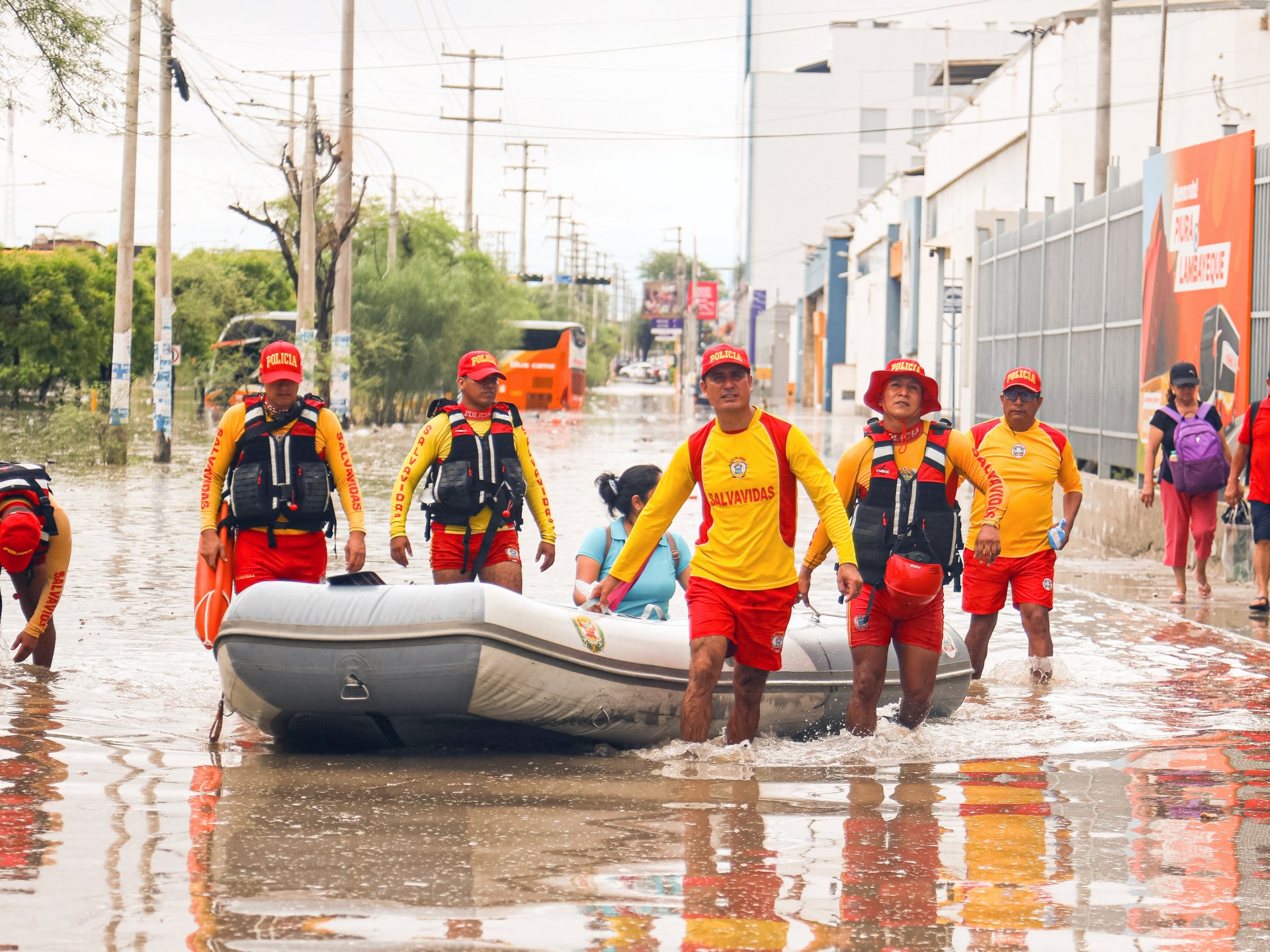
Heavy rains linked to the powerful El Niño climate pattern have caused flooding and landslides in northern Peru and coastal Ecuador, resulting in evacuations, road closures, and the loss of at least 34 lives since August. Forecasters warn that the heavy rain will continue through Monday in Peru's Piura and Tumbes regions, where a red alert has been issued. In the city of Piura, crews have rescued over 400 people from flooded homes, while about a dozen people remain trapped. About 2,000 families have been affected by the floods, according to preliminary reports. Residents in other affected areas, such as Manta and Esmeraldas province, have also been forced to wade through chest-deep water and evacuate their homes due to bursting rivers and landslides.
In Ecuador, at least 34 people have died since late August, with over 47,000 affected by the heavy rains. Mudslides have caused two deaths in the country, while floods and landslides have damaged more than 50 road sections nationwide, including the main highway between Quito and the coast. The storms are also disrupting Ecuador's local elections scheduled for Sunday, which were moved from February to avoid El Niño's peak.
El Niño is a natural climate pattern that begins with a warming of the tropical Pacific and changes rainfall and temperatures worldwide. It was classified as very strong or "super" in September and could be the strongest on record. Peru and Ecuador are among several Latin American countries that have declared national emergencies due to El Niño's effects, which include pushing up food prices by cutting crop yields and fish catches. Annual inflation in Lima has risen to more than 5 percent in October, the highest in three years, and Peru's central bank expects El Niño to cost the economy nearly a percentage point of growth this year.
The electoral council has moved polling stations in five provinces due to the storms, while the storms are also disrupting Ecuador's local elections scheduled for Sunday. President Keiko Fujimori of Peru has warned that the country faces "a mega Nino" and has postponed a trip to Colombia to address the crisis.