In a series of events marking an escalation of tensions in the Middle East, both Iran and the United States have engaged in military actions against each other, with Iran allegedly retaliating for what it claims were airspace violations by US drones. On Tuesday, Kuwait's army announced that the country was under attack by drones, amidst these escalating hostilities.
The US launched strikes on Iran's southern island of Qeshm in the Strait of Hormuz hours after Iran claimed a drone attack on a US radar system in Bahrain. Iranian officials reported no damage from the US attacks, and the situation was said to be under control with relief agencies on high alert. However, five to six explosions were reported on Qeshm island on Tuesday evening. A US official stated that the strike hit a missile launch site on Qeshm in response to Iran's earlier attack on a US base in Bahrain.
The Islamic Revolutionary Guard Corps of Iran claimed responsibility for the drone attack on the US-operated radar at the Sheikh Isa air base in Bahrain, stating it was a response to "repeated violations of Iranian airspace by US military drones". Bahrain's air defences intercepted the attack, and blasts were heard over the capital Manama. This was the third drone attack on Bahrain in five days and the first Iranian attack on a Gulf country since early September.
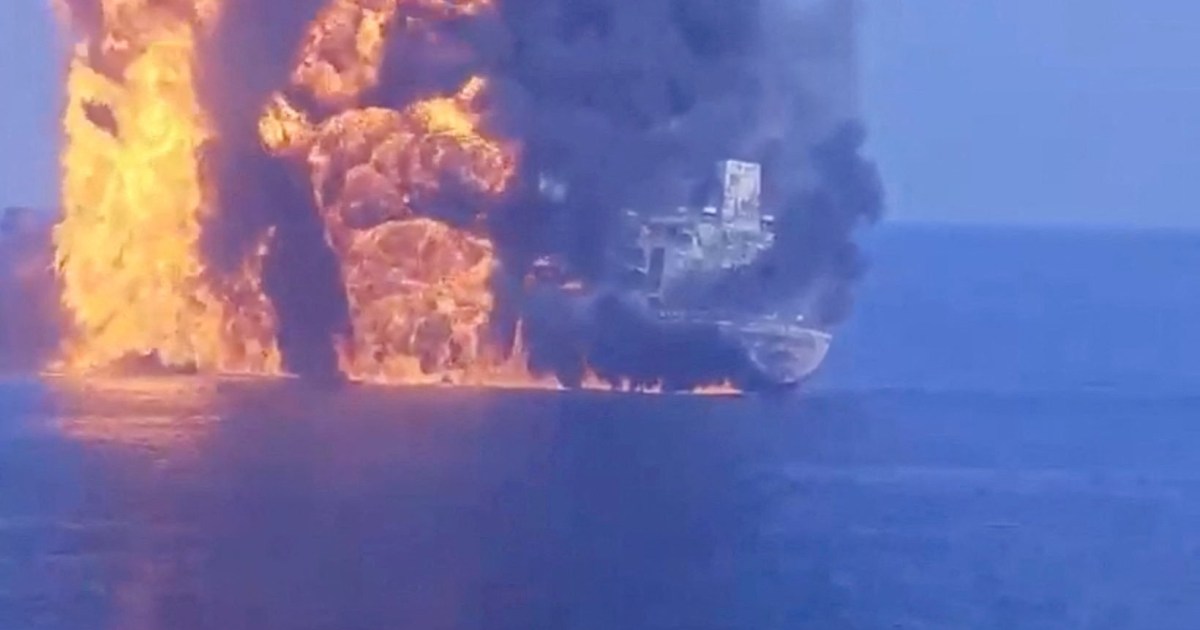
In response to these events, Kuwait's armed forces reported that their air defences were responding to "hostile drone attacks" and urged the public to follow safety instructions. The details of where the drones originated or whether there were casualties or damage are yet to be confirmed. Iran's armed forces also reported three oil tankers struck naval mines while trying to cross the strait on Tuesday, with the US military claiming it had cleared the main routes of mines since the conflict began.
As tensions continue to rise in the region, a third US aircraft carrier, the USS Theodore Roosevelt, arrived in the Middle East on Monday. US President Donald Trump is due to hold a three-way summit in China with Chinese President Xi Jinping and Russian President Vladimir Putin this Thursday, where the Iran war is expected to be discussed. Iran's foreign minister, Abbas Araghchi, and his Omani counterpart, Badr Albusaidi, also held discussions regarding safeguarding shipping and diplomatic options in Muscat, Oman.