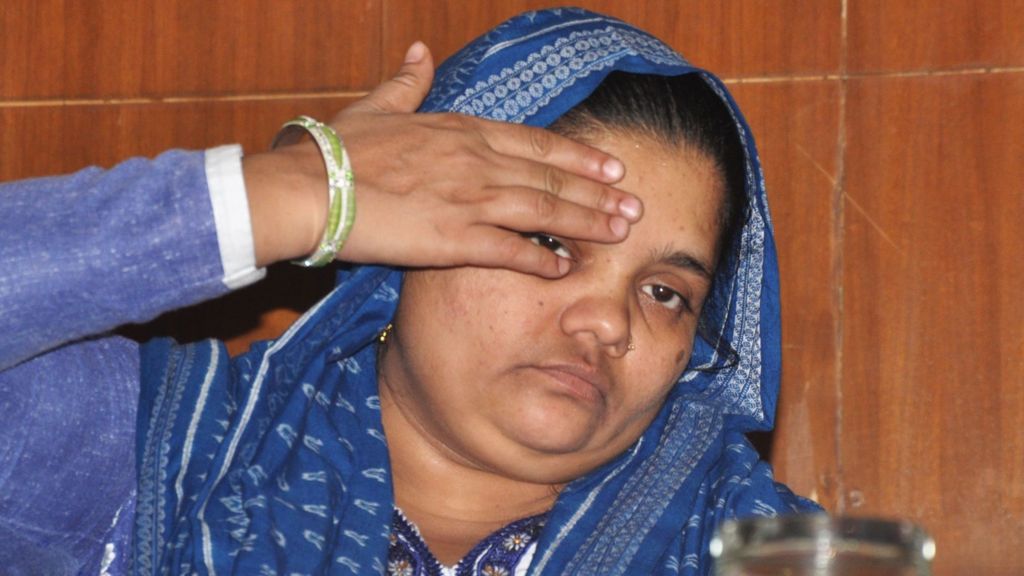
In a shocking turn of events, Bilkis Bano, the Indian woman who was gang-raped and witnessed the murder of 14 family members during the 2002 Gujarat riots, has expressed her "pain, shock, and disbelief" following the recent granting of bail to two of her rapists. The Supreme Court's decision to release Bipinchand Kanaiyalal Joshi and Pradip Ramanlal Modhiya, both convicts serving life terms for their involvement in the attack on Bano, has left the victim feeling heartbroken and questioning her faith in the judiciary.
The two men were released after a Gujarat government order in 2022, causing global outrage. However, this decision was overturned by the Supreme Court in 2024. In a brief three-page order dated October 28, 2021, the court granted bail to Joshi and Modhiya while suspending their sentences, citing their long incarceration of more than 17 years and one convict's severe handicap as reasons for early release.
Bano's lawyer, Shobha Gupta, told the BBC that the news of Joshi and Modhiya's release had left Bano feeling devastated. "She has to restart her battle for justice," Gupta said. "She had no information that this case was coming up in the Supreme Court. What is troubling for us is that every time something like this happens, we worry that it could affect her faith in judiciary."
The 2002 Gujarat riots were a series of violent attacks against Muslims following the fire on a passenger train in the town of Godhra, which resulted in the death of 60 Hindu pilgrims. During these riots, Bano and her family were attacked, leaving her pregnant and with a three-year-old daughter. Her family suffered one of the most horrific crimes during the riots, as her three-year-old daughter was snatched from her lap and killed, while several family members were murdered.
Bano's fight for justice has been long and arduous. The first arrests were made only in 2004 after the Supreme Court called in federal investigators and transferred her case to Mumbai. In her statement released on Monday night, Bano spoke of "fresh tears of pain, shock, and disbelief." She expressed concerns about the court's decision not to consult with her before passing an order that could potentially undermine her pursuit of justice.
Prime Minister Narendra Modi was Gujarat chief minister at the time of the riots and has been criticized for not doing enough to prevent the carnage. Despite the controversy surrounding his role in the riots, he has never apologized for the events and has always denied any wrongdoing.