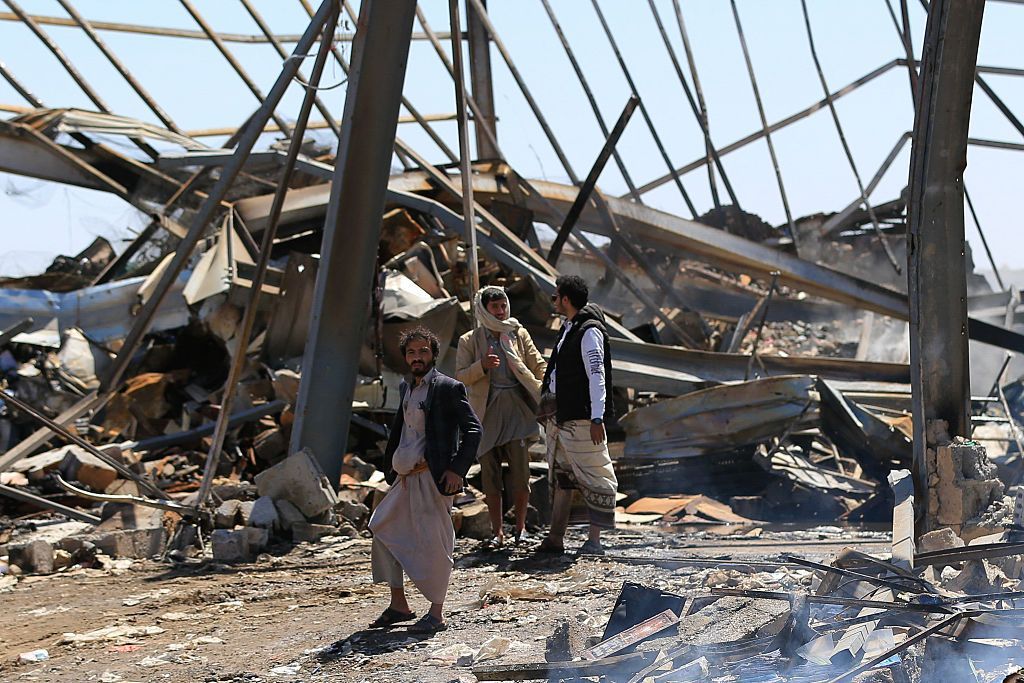
The Iran-backed Houthi rebels, who seized much of Yemen in 2014, have recently forced the army of the internationally recognized government to withdraw from the Red Sea coast. This advance threatens Yemen's legitimate government, Saudi Arabia, and potentially the global economy due to the strategic location of Yemen at the south-western corner of the Arabian Peninsula. The country possesses two coasts, one facing the Indian Ocean and Aden, a once-prosperous trading port, and another facing the Red Sea and the Bab al-Mandab Strait, a narrow chokepoint that accounts for approximately 12% of global trade. The Houthis' control over this strategic waterway could pose a threat to maritime traffic and potentially disrupt the global economy by causing oil prices to soar and inflation to rise. The US and Israel's conflict with Iran in February escalated tensions, as Tehran responded by choking off much of the oil trade flowing out of the Gulf through another narrow chokepoint - the Strait of Hormuz. The Saudi Arabian government has been struggling to maintain control over the Red Sea coast due to a recent breakdown in the cold truce between them and the Houthis, which has led to increased violence and instability in the region. Nicholas Hopton, a former British Ambassador to both Yemen and Iran, warns that if Aden were to fall to the Houthis, it could further destabilize the global economy due to its importance as a trading port. However, Mohammed al-Basha, the Yemeni founder of the US-based risk advisory firm Basha Report, believes that capturing the heavily fortified city of Aden would be difficult for the Houthis and would come at a significant human cost.
The Iran-backed Houthi rebels have made significant gains in Yemen, forcing the army of the internationally recognized government to retreat from the Red Sea coast. This advance puts Yemen's legitimate government and Saudi Arabia at risk, but it also poses a threat to the global economy due to the strategic location of Yemen at the south-western corner of the Arabian Peninsula. The country possesses two coasts, one facing the Indian Ocean and Aden, a once-prosperous trading port, and another facing the Red Sea and the Bab al-Mandab Strait, a narrow chokepoint that accounts for approximately 12% of global trade. If the Houthis gain control over this strategic waterway, they could potentially threaten maritime traffic and disrupt the global economy by causing oil prices to soar and inflation to rise. The US and Israel's conflict with Iran in February escalated tensions, as Tehran responded by choking off much of the oil trade flowing out of the Gulf through another narrow chokepoint - the Strait of Hormuz. The Saudi Arabian government has been struggling to maintain control over the Red Sea coast due to a recent breakdown in the cold truce between them and the Houthis, which has led to increased violence and instability in the region. Nicholas Hopton, a former British Ambassador to both Yemen and Iran, warns that if Aden were to fall to the Houthis, it could further destabilize the global economy due to its importance as a trading port.
The Iran-backed Houthi rebels have seized much of Yemen's Red Sea coast, putting pressure on the internationally recognized government and potentially disrupting global trade and the economy. Yemen is strategically located at the south-western corner of the Arabian Peninsula and possesses two coasts: one facing the Indian Ocean and Aden, a once-prosperous trading port, and another facing the Red Sea and the Bab al-Mandab Strait, a narrow chokepoint that accounts for approximately 12% of global trade. If the Houthis gain control over this strategic waterway, they could potentially threaten maritime traffic and disrupt the global economy by causing oil prices to soar and inflation to rise. The US and Israel's conflict with Iran in February escalated tensions, as Tehran responded by choking off much of the oil trade flowing out of the Gulf through another narrow chokepoint - the Strait of Hormuz. The Saudi Arabian government has been struggling to maintain control over the Red Sea coast due to a recent breakdown in the cold truce between them and the Houthis, which has led to increased violence and instability in the region. Nicholas Hopton, a former British Ambassador to both Yemen and Iran, warns that if Aden were to fall to the Houthis, it could further destabilize the global economy due to its importance as a trading port.