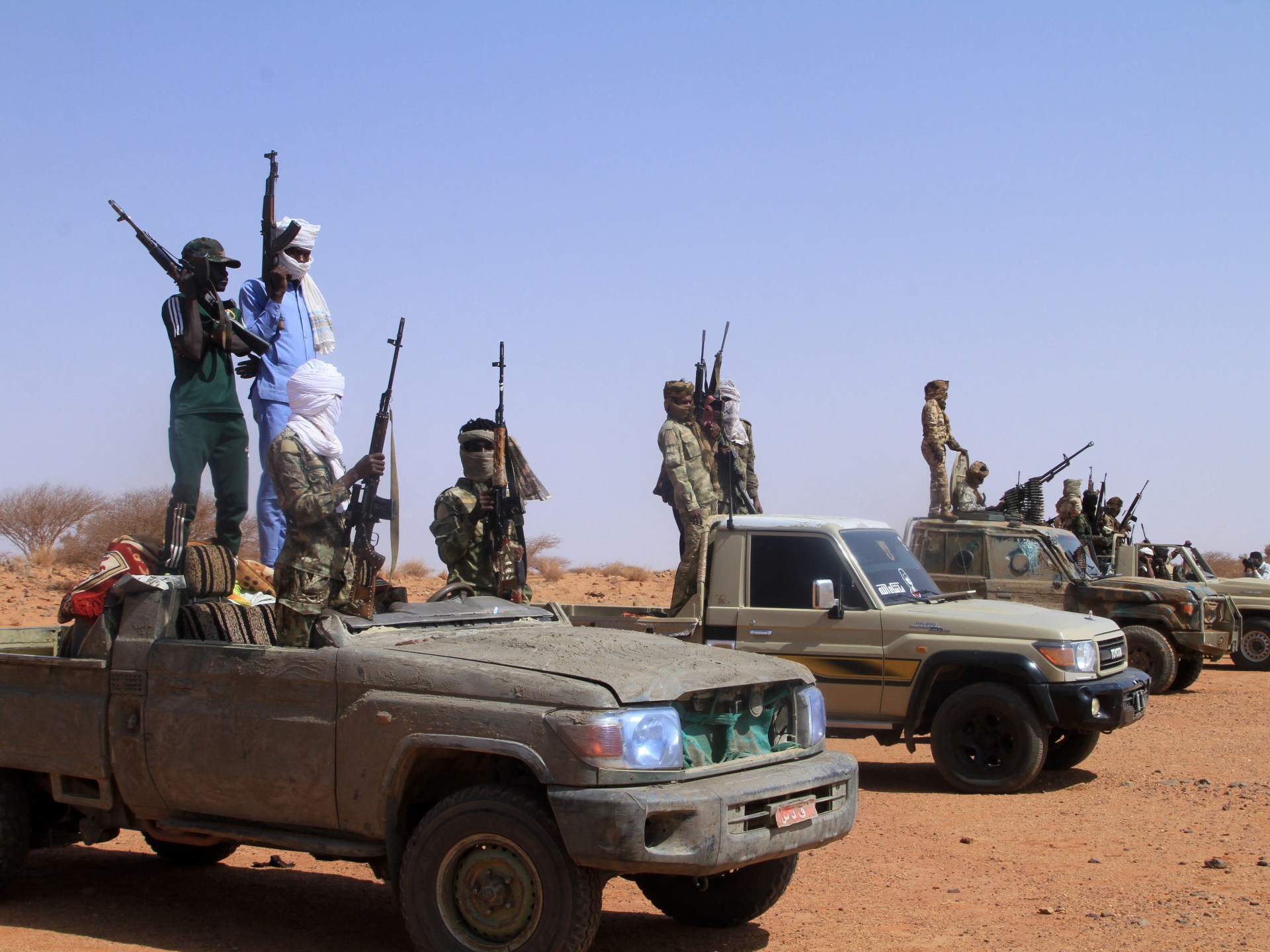
Sudanese War: Battlefield Advancements and Political Push Signal Potential Shift in Conflict Dynamics
Recent military successes by the Sudanese armed forces (SAF) in North Kordofan, coupled with defections from the Rapid Support Forces (RSF) and political initiatives by General Abdel Fattah…
More stories
DR Congo Military Court Imposes Death Sentences on 66 Soldiers for Disloyalty and Disobedience
In a significant move aimed at strengthening military discipline, a military court in the Democratic Republic of Congo (DR Congo) has sentenced 66 soldiers to death for cowardice, mutiny, and refusal
Global Tensions Escalate as Saudi Arabia Intercepts Missiles, Attributed to Houthi Rebels; Pipeline Damage Reported
In a series of escalating tensions between Saudi Arabia and the Iran-backed Houthi rebels in Yemen, Saudi forces have successfully intercepted three missiles targeted at Riyadh and its southern region
US Agencies Unite Globally to Counter Rogue Drone Threats and Secure Airspace
In a collaborative effort led by the White House Task Force, several United States federal departments - the Departments of Transportation, Defense, Homeland Security, Energy, and Justice - have joine
Drones Disrupt Energy Supply in Kurdish Region of Iraq, Suspending Gas Production at Khor Mor Facility
A drone attack targeted the Khor Mor gasfield in the semi-autonomous Kurdish region of northern Iraq on Sunday night, resulting in a fire at the facility and a power outage affecting more than 70% of
Germany Steps Up Security Measures after Drone Incident at Leipzig Airport Involving Potential Russian Agents
German Chancellor Friedrich Merz has vowed to respond firmly to hostile actions against his country, including a recent drone attack at Leipzig/Halle Airport that involved an explosive device. On Augu
Libyan Exonerated in Lockerbie Bombing Case, Al Amin Khalifah Fhimah, Passes Away at 70
In a recent announcement by Libyan Airlines, it was reported that Al Amin Khalifah Fhimah, who was acquitted in the high-profile Lockerbie bombing trial of 1991, has passed away at the age of 70. The