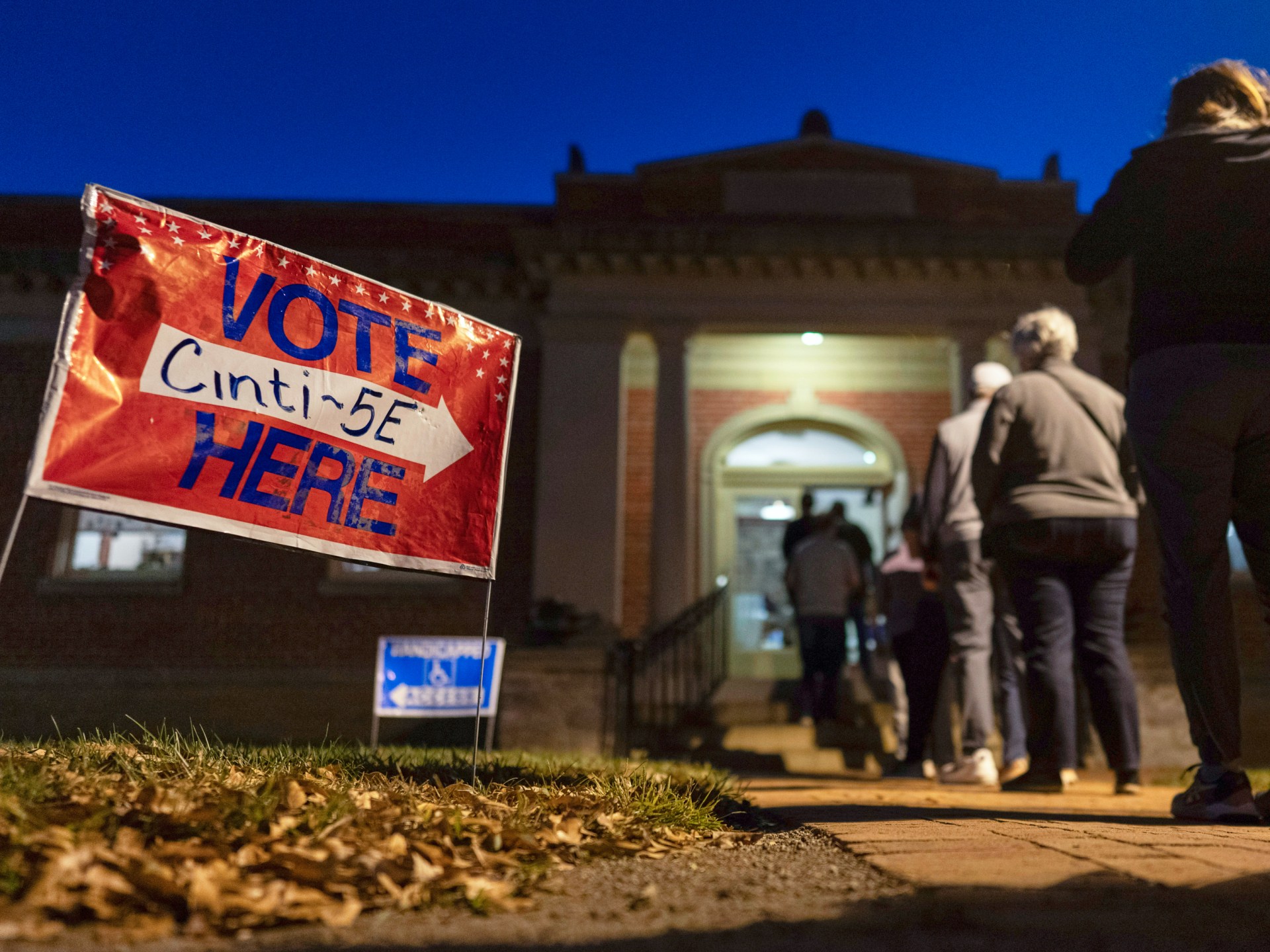
US Federal Court Injunction Halts Ohio Law Demanding Citizenship Proof for Voter Registration
A United States district court has temporarily halted an Ohio law that required citizenship proof from residents registering to vote, while they obtained a driver's license.
More stories
Trump Hints at De-escalation with Iran, Dismissing Further US Attacks as Unlikely
In a press briefing from the White House, President Donald Trump stated that military action against Iran is "highly unlikely," and suggested the United States was maintaining a "status quo" stance wh
Cameroon Announces Date for Long-Awaited Legislative and Local Elections
In a significant political development, Cameroon's President Paul Biya, the world's oldest head of state, has set February 7, 2023, as the date for the long-delayed legislative and local elections. Th
Americans Shift Away from Support for Pro-War Candidates, Poll Indicates
In a significant shift in political sentiment ahead of the 2026 midterm elections, a YouGov poll has revealed that a majority of Americans are less likely to support candidates who advocate for the US
Victim of Epstein Accuses Former Model Agency Head of Endangering Her
A survivor of Jeffrey Epstein's sexual abuse has accused the former president of her modeling agency, Jeff Fuller, of putting her in danger by sending her to photoshoots at Epstein's Florida beach hou
Trump Suggests End to U.S.-Iran Conflict, Claiming Military Stalemate Amid Middle East Peace Talks
In a surprising announcement following a meeting with Qatar's Prime Minister Sheikh Mohammed bin Abdulrahman bin Jassim Al Thani in Washington D.C., U.S. President Donald Trump hinted at the potential
US Supreme Court Clears Way for Border Wall Construction in Big Bend National Park
In a significant decision, the United States Supreme Court has granted an emergency request by President Donald Trump's administration to proceed with the construction of a border wall through a remot