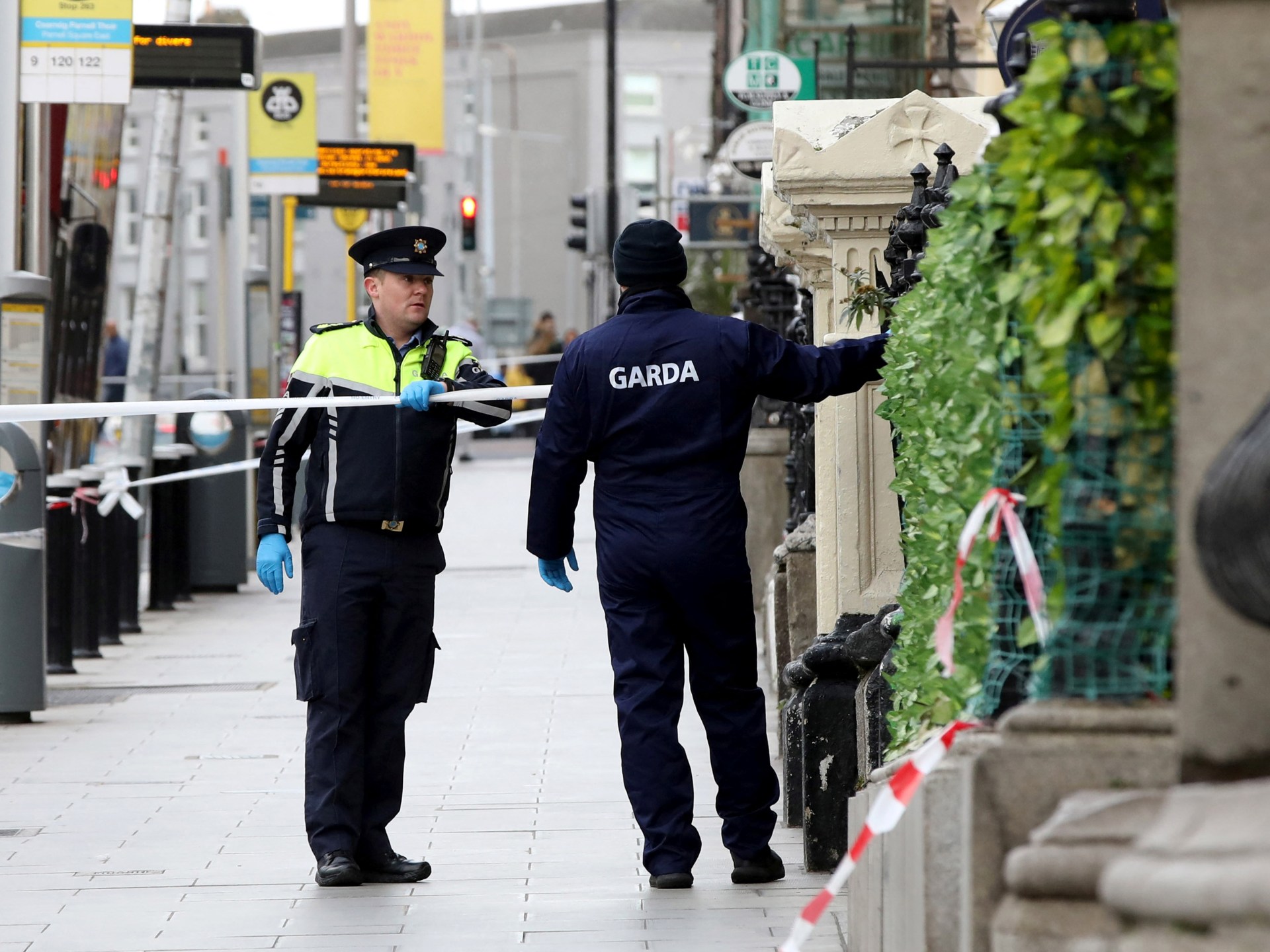
In a landmark verdict, a 52-year-old man, identified as Riad Bouchaker, an Algerian national and Irish citizen, has been sentenced to life imprisonment by the Central Criminal Court in Dublin for the attempted murder of three children during a knife attack outside a school in the heart of the city on November 23, 2023. The incident, which left four victims—a five-year-old girl, a six-year-old girl, a five-year-old boy, and a woman in her mid-30s—injured, sparked widespread rioting and looting in the Irish capital, marking one of the most violent episodes in decades.
The youngest victim, a girl then aged five, was critically injured with a stab wound to the heart, leading to severe disabilities including speech impairment, mobility issues, and dependence on a feeding tube due to brain damage caused by oxygen deprivation for 40 minutes following the attack. The girl, now eight, communicates only through blinking and uses a wheelchair.
Bouchaker was also found guilty of assaulting childcare worker Leanne Flynn who sustained serious injuries while attempting to protect the children during the attack. In his remarks outside the court, Garda Superintendent Colm Murphy acknowledged the heroic actions of those who intervened, particularly Leanne Flynn, stating that her actions undoubtedly saved lives.
In the aftermath of the incident, misinformation about Bouchaker's identity spread online, inciting anti-immigration activists and far-right groups, resulting in widespread rioting, vehicle arson, and shop looting in the city center. The violence prompted national debates on immigration, online misinformation, and public order, leading to nearly 100 arrests and over 80 charges. Bouchaker had initially pleaded not guilty to three counts of attempted murder and three counts of assault causing harm, as well as one count each of intentionally or recklessly causing serious harm and brandishing a dangerous weapon, a kitchen knife. However, the court found him guilty on all counts after a trial that heard evidence from over 80 witnesses, including eyewitnesses, emergency responders, police officers, and forensic experts.
The court took into account Bouchaker's previous health issues, such as a benign brain tumor requiring surgery two years prior to the attack, and his subsequent head injury due to interventions by bystanders immediately after the incident. Despite these factors, Bouchaker was found fit to stand trial, and there was no evidence suggesting he was suffering from a mental disorder at the time of the incident.