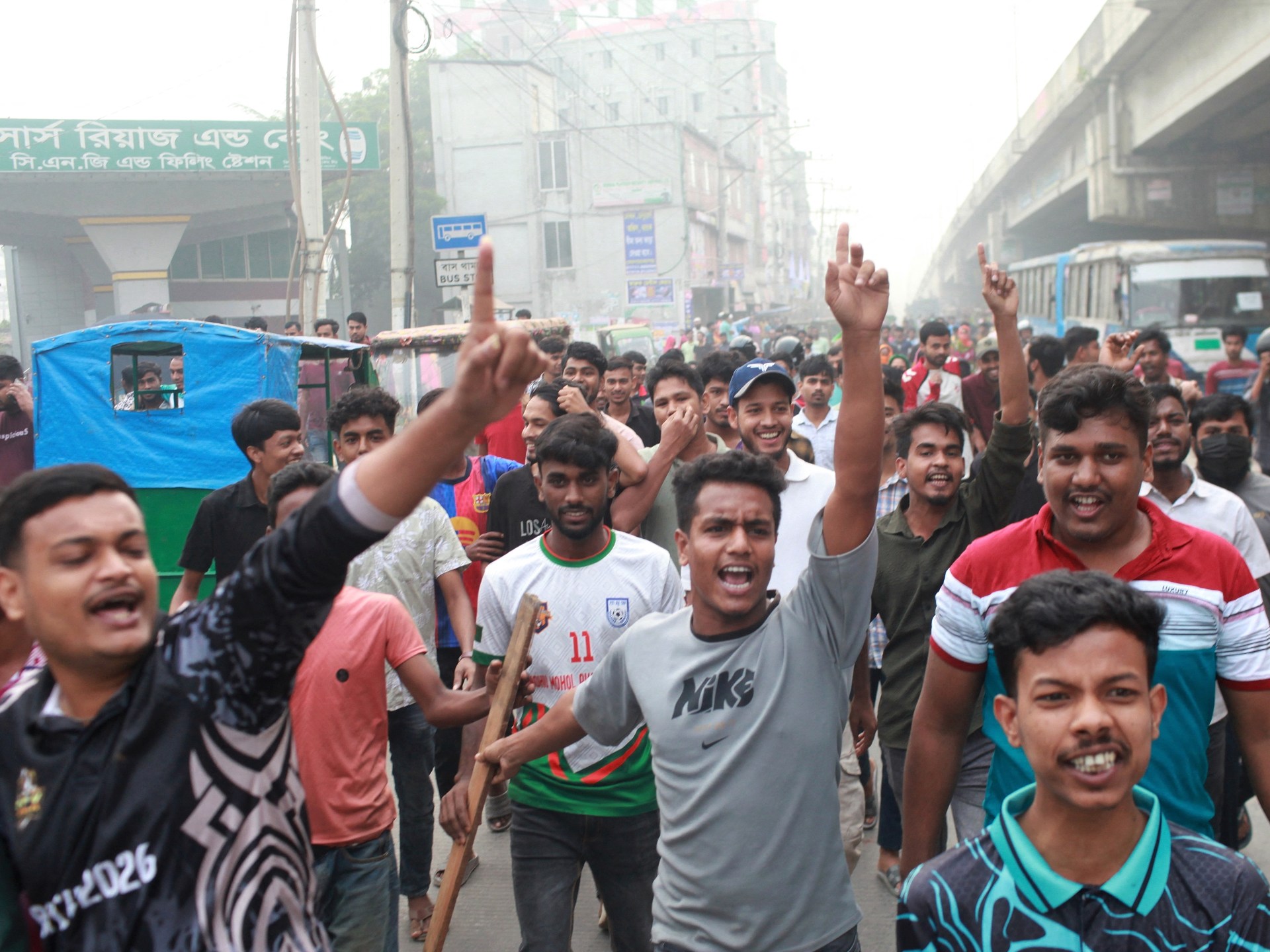
Thousands of garment workers in Bangladesh have clashed with police after a key wage board meeting was postponed, resulting in the use of tear gas and stun grenades by authorities. On Tuesday, protesters blocked the main highway connecting Dhaka and Mymensingh, throwing bricks and torching vehicles, causing disruption to traffic and commerce. The South Asian nation is the world's second-largest garment exporter after China, supplying clothing for international brands such as Fruit of the Loom and Levi Strauss.
The ongoing unrest among workers, which started last month, has caused significant disruptions to the industry, generating an annual revenue of $38 billion and employing over four million people. The workers are demanding a minimum monthly wage of 30,000 taka ($240), a substantial increase from the current 12,500 taka, as they struggle to cope with escalating living costs. Approximately 500 out of the country's 4,500 garment factories have been closed, exacerbating the tension among workers.
Under Bangladesh's labor laws, a "no work, no pay" provision allows factory owners to suspend operations and withhold wages during production disruptions. One worker, Khanom, expressed their frustration, stating, "The owners seem unwilling to meet our salary demands. They are already dragging their feet." Tensions are also high in the garment hubs of Savar and Ashulia on Dhaka's outskirts.
The wage board, consisting of representatives from employers and workers, was established by the government earlier this month to negotiate a pay increase. The new minimum wage is expected to be announced in December and take effect in January 2023. However, workers fear their concerns may not be adequately addressed in the revised wage proposal, as they are unsure if the wage board members are fully aware of their demands.
In response to Tuesday's protests, the Border Guard Bangladesh (BGB) has increased patrols across the industrial zone and deployed hundreds of personnel. The force is also utilizing drones, body-worn cameras, and other devices to monitor demonstrations closely. A joint statement from the Bangladesh Garment Manufacturers and Exporters Association (BGMEA) and the Bangladesh Knitwear Manufacturers and Exporters Association (BKMEA) has called for a resumption of wage negotiations as soon as possible. The next wage board meeting is scheduled for November 23, according to reports.