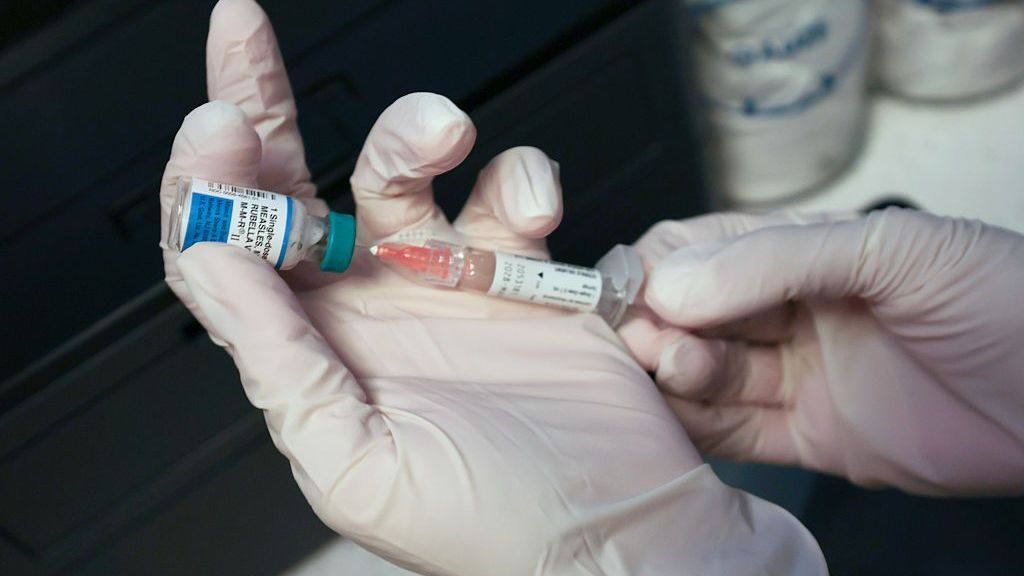
In a significant setback for public health efforts, the United States has lost its elimination status of measles after 26 years. This decision comes following two consecutive years of record-breaking case numbers and deaths, according to the Pan American Health Organization (PAHO), a specialized agency of the United Nations. The US had been uninterrupted in its transmission of the same strain of measles for over a year, with states reporting ten measles-related deaths this year, the highest number since the early 1990s. This development places the US alongside Canada, which also lost its measles elimination status last year due to several large outbreaks. Additionally, European nations such as the UK, Spain, and Austria, as well as countries like Russia, Azerbaijan, and Uzbekistan, have also lost their measles-free status this year.
The loss of the elimination status is a cause for concern, with Nuwan Gunawardhana, an assistant professor of medicine at Columbia University Irving Medical Center, describing it as "a huge leap backwards." The US Department of Health and Human Services (HHS) did not respond to a request for comment from the BBC. The measles virus, known for its distinctive blotchy red rash, used to infect millions of children before a vaccine was developed. Although vaccination campaigns had previously helped the US eliminate measles in the Americas, trust in vaccines has been eroding in recent years due to misinformation about their safety during the Covid-19 pandemic and subsequent loss of public confidence in healthcare systems.
The vaccination rate for Measles, Mumps, and Rubella (MMR) shots in the US has dropped below the 95% level required for herd immunity, leading to a surge in measles cases this year. An outbreak in Pennsylvania has infected over 1,400 people and resulted in seven deaths, according to state officials. Robert F Kennedy Jr., the US Health Secretary, has been at odds with Pennsylvania officials regarding the counting of measles deaths and has attempted to implement changes to US vaccine recommendations and policies. His vaccine skepticism and questioning of the MMR shot's safety have contributed to declining vaccination rates across the US.
In response to this development, public health officials urge clear communication from government authorities to dispel confusion and misinformation about vaccines. The federal government's actions have left states to fill in the gaps with their own recommendations upholding decades-long practices. However, the challenges posed by vaccine skepticism and misinformation persist, necessitating ongoing efforts to restore public trust in vaccination programs.