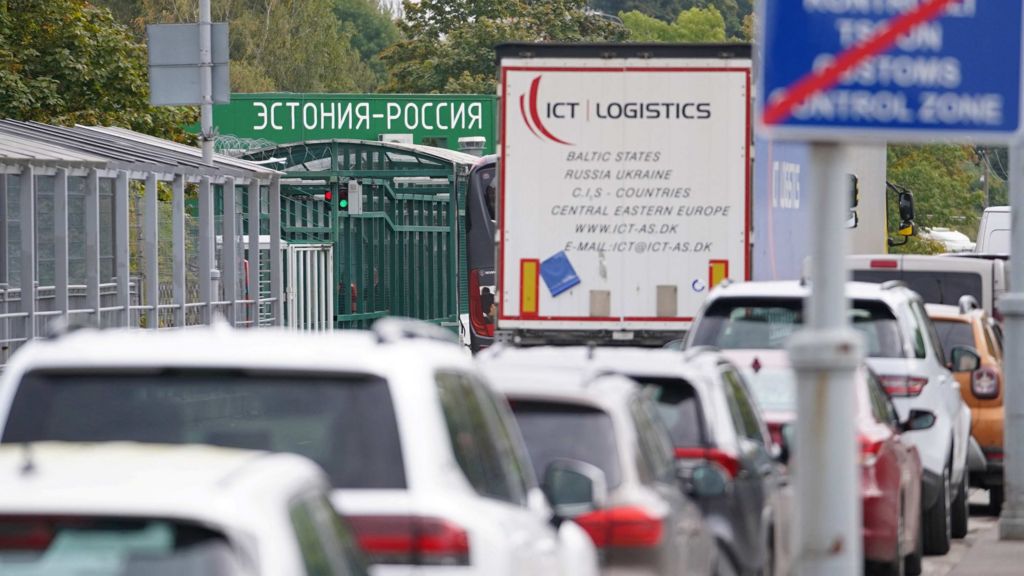
The Estonian government has announced its intention to close border crossings into Russia, effective from December 1st, following an alleged arson attack on a drone factory. The facility, operated by Threod Systems and producing drones for Ukraine and NATO member states, was targeted in what Prime Minister Kristen Michal described as part of Russia's "broader hybrid war against Europe." The accused perpetrators, reportedly Latvian nationals, were apprehended after attempting to set fire to the factory using flammable liquids. Moscow has denied any involvement and accused Estonia of constructing a metaphorical wall between the two countries. Foreign Minister Margus Tsahkna stated that this measure would impede Russia's capacity for hostile activities within Estonia. The decision to enforce border closures is set to be formalized next week, causing potential complications for families residing on both sides of the border. Estonia shares a 338 km (approximately 220 miles) boundary with Russia, encompassing three operational road crossings, one of which is located in Narva, Estonia's third-largest city.
In recent months, Russia has been accused by European leaders of targeting national infrastructure and resources destined for Ukraine since the initiation of Russia's full-scale invasion in 2022. Leaders from the Baltic region have repeatedly denounced Russia for hybrid attacks and expressed concerns about the Kremlin's territorial aspirations. Other significant backers of Ukraine in Europe, including France, Germany, the UK, and Poland, have also reportedly experienced orchestrated attacks on their soil in recent months. Last year, six men were imprisoned in the UK over an arson attack linked to Russia at a London warehouse storing aid bound for Ukraine.
Kremlin spokesman Dimitry Peskov voiced his disapproval of Estonia's decision, likening it to the construction of walls that have historically brought no benefits to those who erect them. This incident marks another escalation in tensions between Estonia and Russia, as European nations continue to navigate the complex geopolitical landscape of Eastern Europe.
Caution: The allegations against Moscow remain unproven, and it is essential to maintain an objective perspective on this developing situation.