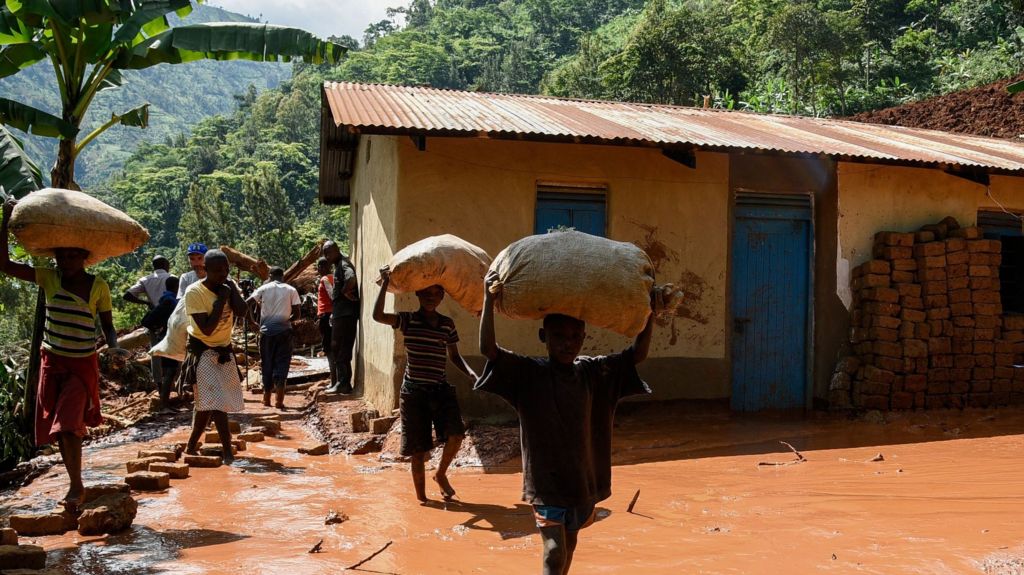
In an unprecedented move, survivors of a devastating landslide in Bududa, eastern Uganda, have taken their plight to the United Nations Human Rights Committee. The 48 claimants accuse the government of neglecting its constitutional duty by failing to establish adequate disaster management measures in the region, which is prone to landslides. With heavy rains raising the risk of further landslides, they argue that the government's relocation program disregards their safety, land rights, and livelihoods. The case could set a global precedent as the first seeking climate adaptation measures. In 2019, a landslide struck Bududa, claiming over 53 lives, including 33 children. Survivors like William Tsama, who lost four family members, are fighting for compensation, emergency measures, and long-term solutions to prevent future tragedies. The UN Human Rights Committee is expected to respond within six months.
Ugandan authorities introduced a resettlement plan in 2011 for landslide-prone areas, but progress has been slow with few people relocated. Last month, the government launched a new resettlement program offering affected households approximately $4,300 to move to safer locations. However, some survivors question whether this amount is sufficient to cover relocation and rebuilding costs. The government has given residents of designated high-risk areas two months to leave or face forced eviction.
The complainants also highlight the impact of changing rainfall patterns and declining soil fertility on farming in the region, leaving many families struggling to secure their livelihoods. "I want to get a new good place for my people, so even if I die, they will be okay. I am an old man, but I am doing it for my children," Tsama said. The survivors initially filed a lawsuit in Uganda in 2020 and received support from the Ugandan environmental organization Greenwatch three years later.
This case is not just about seeking compensation but changing how governments prepare and respond to climate-related disasters, according to Samantha Atukunda Kakuru Mwesigwa, Executive Director of Greenwatch. The threat of climate-related disasters extends across East Africa, with Kenya, Rwanda, and Nepal experiencing fatal floods and landslides in recent years. Climate justice advocates argue that high-income countries must provide financial assistance to help poorer countries implement life-saving adaptation measures.
The survivors' case is now before the United Nations Human Rights Committee, which will ask the Ugandan government to respond within six months. The outcome could have significant implications for disaster management and climate justice not just in Uganda but globally.