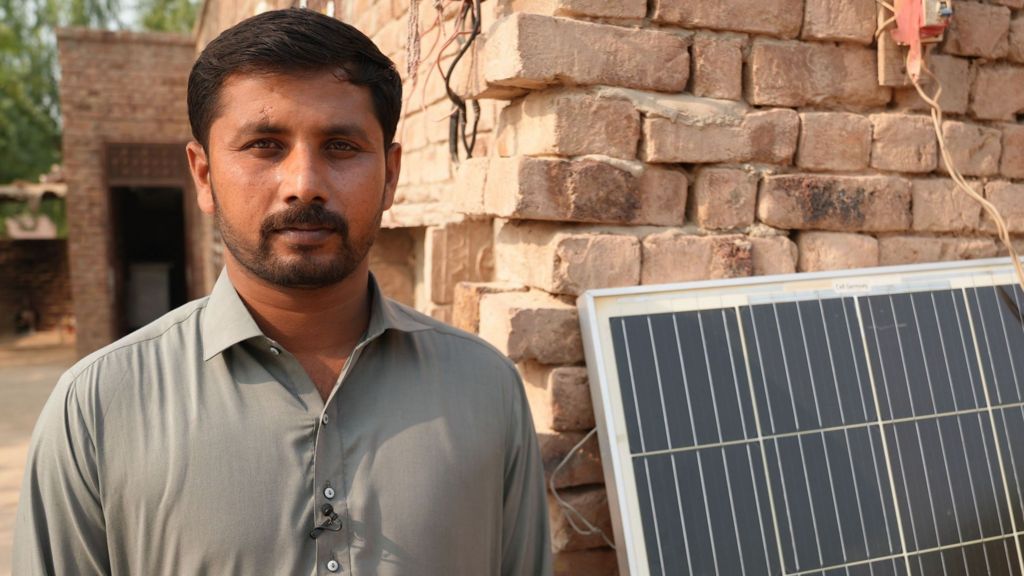
In rural Punjab, homeowners like Faisal Shahzad are embracing solar energy as a prized dowry gift, marking a significant shift in Pakistan's energy landscape. Over the past few years, imported solar panels have become ubiquitous, gracing rooftops of homes and hospitals, farmers' fields, and industrial complexes across the country. This rapid adoption has boosted the share of solar electricity from 1% to an impressive 28%, according to Renewables First, with approximately seven million households now harnessing solar power.
As the average wage hovers around £110 ($145) per month, soaring electricity prices and an unreliable national grid have driven individuals to install solar panels as a cost-saving measure. Electricity tariffs have more than doubled in recent years, while the cost of Chinese solar panels has decreased by 93%, creating an appealing alternative for many households. However, this trend poses challenges for Pakistan's national grid system, which is experiencing knock-on effects from the mass exodus to solar power.
The government acknowledges the benefits of solarization but expresses concerns about the potential utility death spiral. When people buy less energy from the national grid, fewer customers remain to cover the fixed costs of maintaining it, leading to higher prices and encouraging more people to switch to solar. This could result in a two-tier system where those unable to afford solar panels face escalating bills, while the national grid becomes an increasing burden on the state. The government aims to mitigate these issues by making the grid more competitive, improving efficiency with better storage, less waste, and increased innovation.
Pakistan's ambition is to run on up to 90% clean power by 2036, including renewables and nuclear, with dependence on imported energy reducing from 26% to 4%. However, the government must balance this goal with ensuring the sustainability of the national grid in the face of widespread solar adoption.