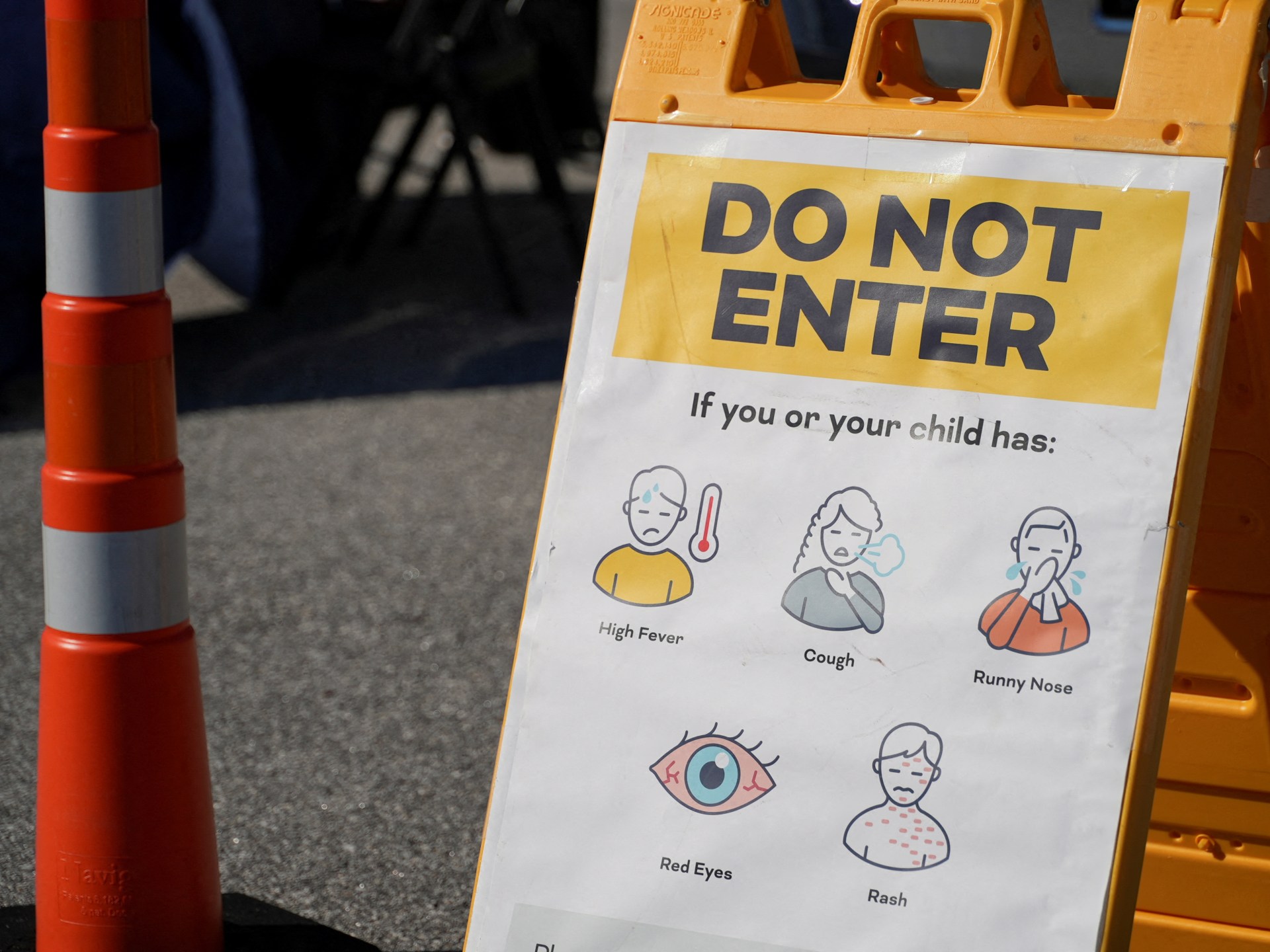
The Americas branch of the World Health Organization (WHO) has withdrawn the measles elimination status of the United States, a significant setback that marks the first time the country has been deemed endemic with the virus since 2000. This decision comes after continuous circulation of the same strain for at least 12 months in the US, as well as Bolivia and Mexico. The WHO's international panel of experts recommended this action, which has been accepted by Dr Jarbas Barbosa, director of the Pan American Health Organization (PAHO). Measles was declared eliminated in the US in 2000, but the country has seen a surge in cases since the beginning of 2025, with approximately 7,700 reported infections – the highest number in more than three decades. The rise in numbers can be attributed to growing vaccine hesitancy, fueled by Health Secretary Robert F Kennedy Jr's skepticism towards vaccines despite scientific evidence supporting their safety and effectiveness. The US Centers for Disease Control and Prevention (CDC) has provided additional funding to state and local health departments to strengthen vaccination efforts, surveillance, and outbreak response. Despite the loss of its measles elimination status, the CDC remains committed to stopping measles outbreaks and regaining the country’s elimination status.
---
SUMMARY (CONTINUED):
The WHO's announcement follows a review of epidemiological and laboratory evidence submitted by the US Centers for Disease Control and Prevention (CDC). Countries that lose their measles elimination status are required to submit a corrective action plan to PAHO in the coming weeks. The CDC has confirmed six measles-related deaths this year, but state health officials in Pennsylvania, Wisconsin, and New York have reported 10 deaths combined, creating tensions between federal and state health authorities over how measles deaths are classified and counted. Measles is considered highly infectious, with the WHO estimating that it caused 95,000 deaths worldwide in 2024, mostly among children. The loss of the US's measles elimination status can serve as a wake-up call for public health officials, according to biology professor Matt Ferrari of Pennsylvania State University's Center for Infectious Disease Dynamics. The US was previously seen as a model for controlling measles, but its success in eliminating local transmission for over a quarter of a century may have led to complacency.
---
SUMMARY (CONTINUED):
The loss of the US's measles elimination status is a "stain" on the country's public health program, according to Edwin Asturias, a professor of paediatrics, infectious disease, and epidemiology at the University of Colorado. Measles cases are indicative of problems within a nation's immunization program and other public health services. To prevent further outbreaks, it is crucial to expand vaccination efforts beyond pediatricians and family doctors by making vaccines available in workplaces, places of worship, and other community settings. Approximately 40% of current US measles cases are among adults older than 20, highlighting the need to reach these populations. The loss of the country's elimination status underscores the importance of maintaining strong vaccination programs and public health initiatives to protect against infectious diseases like measles.