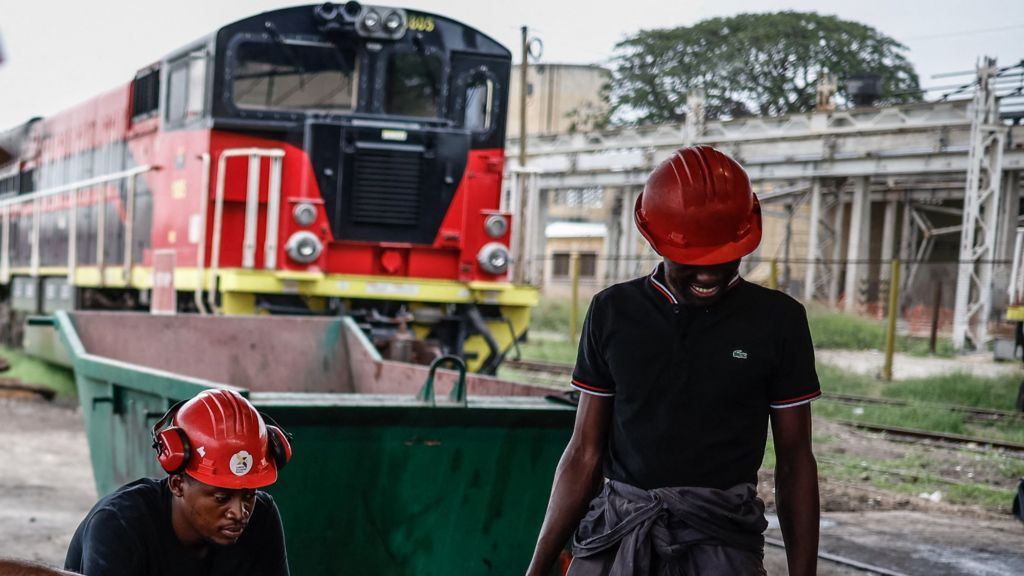
In a bid to secure access to Africa's critical minerals and promote regional economic cooperation, the United States is backing the development of the Lobito Corridor. This railway project, which runs through the Angolan city of Lobito on the Atlantic coast, is improving local transport for residents like 20-year-old Manuela Julia but has ambitions that extend far beyond this. The corridor is expected to formalize the mineral trade, curb illicit markets, and potentially help bring peace to conflict-torn eastern Democratic Republic of Congo (DR Congo). Under agreements brokered by President Donald Trump, DR Congo and neighboring Rwanda have committed to greater economic cooperation, including more transparent mineral supply chains and regional infrastructure development. The wider plan envisions linking these initiatives to the railway, which transports minerals from Central Africa to Western markets via Angola, rather than east to China as most currently do. The hope is that this could help curb illicit markets that have helped finance armed groups and fuel instability in DR Congo. However, it remains to be seen whether a railway built to move minerals to global markets can also deliver peace and prosperity.
The Lobito Corridor links DR Congo's mineral-rich south to Angola's Atlantic coast through the Benguela Railway and the Port of Lobito. Its importance has grown as demand for copper and cobalt rises, driven partly by the global transition to cleaner energy, as both are critical ingredients for all kinds of electrical components. The US sees the corridor as a means to diversify mineral supplies and reduce reliance on China, which dominates much of the world's processing capacity. A US-DR Congo strategic partnership identifies the route from the Congolese town of Sakania to Lobito as a priority for mineral exports, while the economic framework agreed by DR Congo and Rwanda envisages connecting regional infrastructure and trade initiatives to the corridor. The project has attracted over $750 million, including funding backed by the US International Development Finance Corporation and the Development Bank of Southern Africa to upgrade railway tracks, signaling systems, and trains.
The renewed ambitions for the Lobito Corridor are already visible at its mineral terminal, where a train carrying about 12,000 tonnes of copper cathodes from DR Congo had arrived when reporters visited. The cargo is handled by Lobito Atlantic Railway (LAR), which has a 30-year concession to operate freight services along the corridor and manage the mineral terminal. Freight volumes have more than doubled since the company took over in January 2024, with LAR expecting to transport about 200,000 tonnes of copper through the corridor in 2026. For mining companies, the railway offers a shorter route to international markets, and Zambia, Africa's second-largest copper producer, also plans to connect its Copperbelt to Lobito through a proposed 830km (515 mile)-railway. However, joining a corridor is not the same as industrializing, and it remains to be seen whether this railway will lead to broader economic transformation for Angola and DR Congo beyond the mining sector.