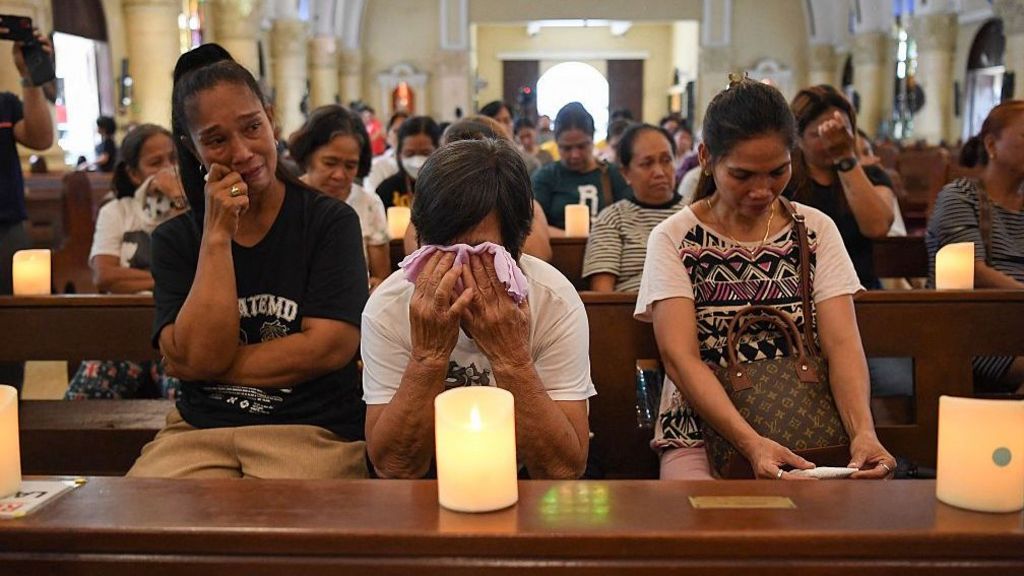
On Monday, the International Criminal Court will commence the trial of former Philippine President Rodrigo Duterte, who is accused of crimes against humanity in connection with his violent anti-drug campaign. Despite continued support from some quarters, many victims' families view this trial as an opportunity for accountability and recognition of their suffering, which they have been denied since the killings began over a decade ago. Duterte, now 81 years old, faces charges of murder and attempted murder, with thousands of alleged drug dealers reportedly shot and killed during his tenure. Families of victims claim that many were innocent, and one mother recounts her daughter's disappearance seven years ago in a harrowing account of the political climate of fear and violence that has plagued the Philippines since Duterte took office.
The trial comes as the current government under President Ferdinand Marcos Jr. faces criticism for sending Duterte to a foreign court, with some arguing it undermines national sovereignty. Yet for those affected by the drug war, the prospect of justice is a glimmer of hope in a long-standing struggle for accountability and human rights. The case dates back to before Duterte's presidency, with allegations of death squads during his time as mayor of Davao City. As president, Duterte withdrew the Philippines from the ICC, but the court has proceeded with the investigation based on jurisdiction principles.
Many families of victims have been met with hostility and threats in a bitterly divided political climate, with social media attacks commonplace. One uncle whose nephew was killed by police during the drug war expresses gratitude for the trial at The Hague, seeing it as an acknowledgement of the widespread human rights abuses that occurred under Duterte's watch. For those who reported on the drug war, the stories of violence and loss were among the most harrowing they had ever covered, with bodies turning up almost from the day Duterte took office. The killings were carried out by police officers during door-knocking operations against suspected drug users and dealers, as well as hit squads on motorbikes who shot victims as they drove past. One young woman reportedly recruited as an assassin by a corrupt police officer claimed to have killed five people in the three months following Duterte's election. The trial at the ICC represents a crucial step towards accountability for those affected by the drug war, offering a chance for justice and healing for thousands of families who have been left to carry their pain alone for far too long.