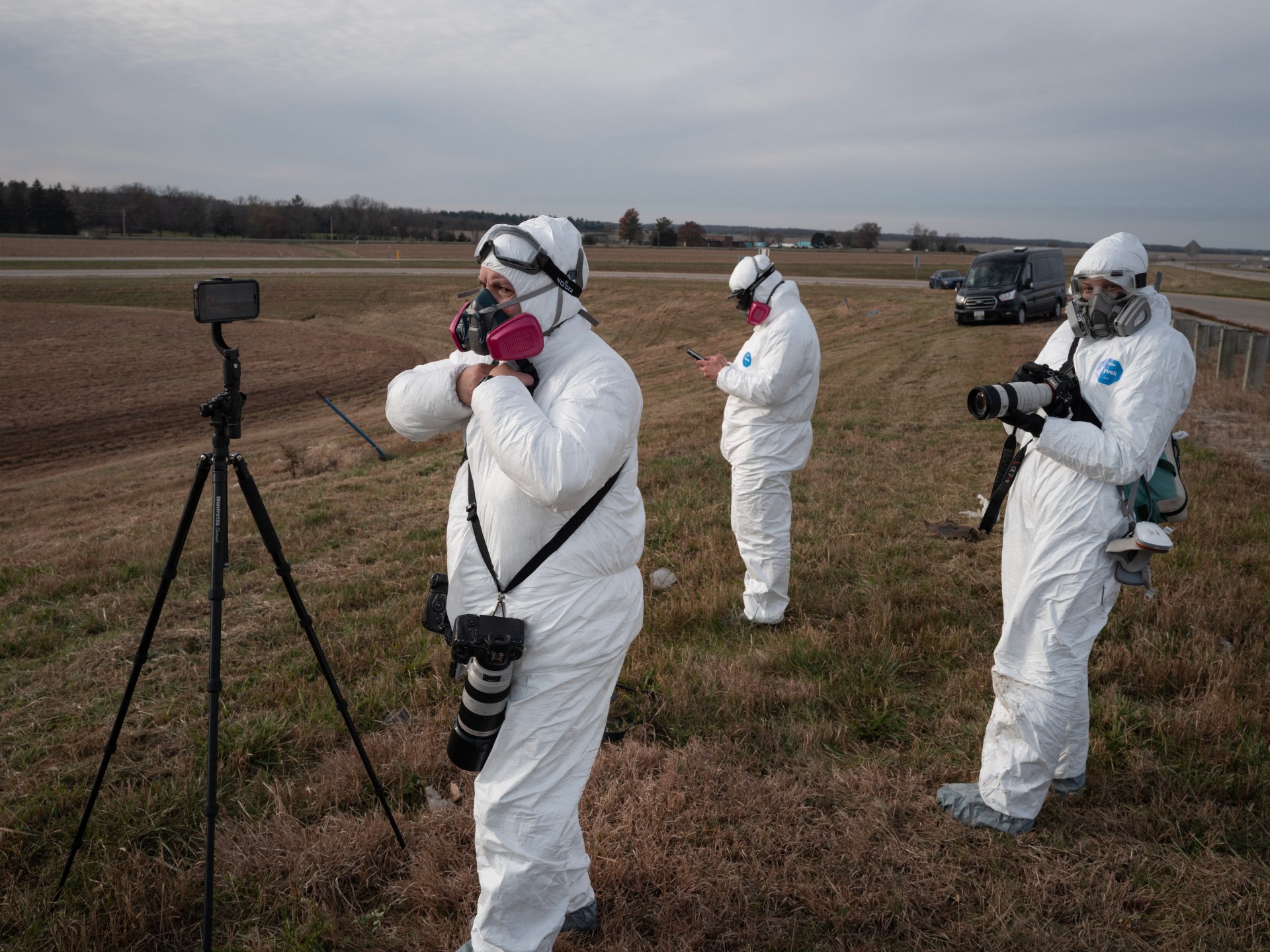
In a recent development, the United States Environmental Protection Agency (EPA) has reported that the controlled detonation of five tonnes of highly volatile lead azide in Middletown, Iowa, did not result in an increase of heavy metal levels in local water sources. The detonation took place on Thursday at an army munitions depot, sparking concerns about potential environmental contamination and communication issues between the federal government and the public.
On Saturday, the EPA posted its initial laboratory results online, revealing that over 3,200 samples of air, soil, dust, and water were taken before and after the detonation. The agency used an Xact air monitoring system to measure airborne lead for 30 consecutive hours following the explosion. They will continue to provide updates as more lab results are validated in the coming days.
The decision to detonate the stockpile was made due to its degrading condition and potential risk of spontaneous explosion as the weather grew colder. However, the sudden announcement raised concerns among residents and some elected officials about lack of transparency and insufficient notice. While initial air quality readings have been welcomed by independent experts, they emphasize that the real measure of lead fallout will come from sampling of water, soil, and structural surfaces, which requires further analysis.
The US Army has been criticized for not providing more notice when it first determined the stockpile was unstable. While residents in Middletown were informed about the plans, the warnings failed to reach elected officials and the broader public until days before the planned detonation. The EPA will continue to monitor the situation closely and release updates as new information becomes available.