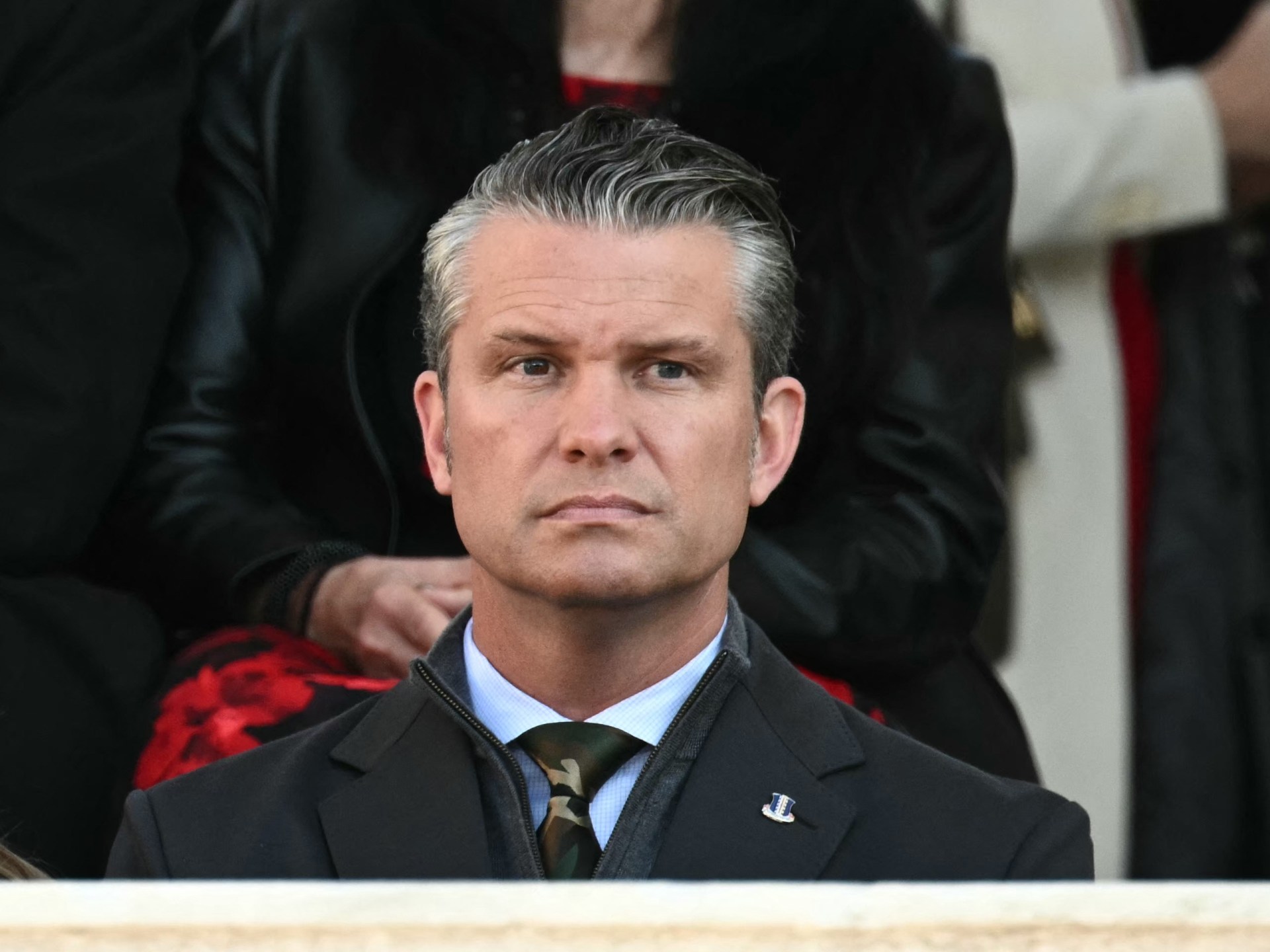
After a failed impeachment attempt, Defense Secretary Pete Hegseth continues to face criticism over his leadership at the Pentagon. Following the midterm elections in the United States, there are questions about whether he will retain his position as Congress's new Democratic majorities take office. Critics have accused him of dismantling safeguards and contributing to incidents such as the bombing of an Iranian elementary school that resulted in the death of over 120 children. Despite this, Hegseth has resisted calls for his resignation, emphasizing his commitment to serving the military and the war-fighter. The impeachment proceedings were halted after a vote by the Republican majority in the House, with eleven Democrats absent. This is not the first time a Pentagon chief faces pressure to leave office following a dismal election for their party, as was the case with Donald Rumsfeld during the midterm elections of 2006. However, some within Hegseth's own party have also criticized his role in guiding divisive moments, such as the bombing of the Minab elementary school on the first day of the Iran war.
SUMMARY (CONTINUED):
Since taking office in January 2025, Hegseth has overseen some of President Donald Trump's most controversial international campaigns, including the war on Iran and a series of deadly boat strikes in the Caribbean Sea and eastern Pacific Ocean. Both campaigns have been accused of violating international law, with the Iran war becoming a political albatross for Trump's Republican Party during the midterm race. A poll conducted earlier this month found that 44 percent of US voters were less likely to vote for a midterm candidate who supported the war, compared to only 13 percent who said they were more inclined to do so. The Democratic Party achieved a landslide victory in the November 3 midterms, flipping both the House of Representatives and the Senate from Republican control.
SUMMARY (CONTINUED):
Jasmine El-Gamal, a former Middle East adviser in the Pentagon, believes that targeting Hegseth alone would not be enough to secure accountability for decisions like launching the US-Israel war on Iran. She explains that Hegseth holds significant power in directing the US war effort but works closely with the president and his advisers. El-Gamal suggests that calling Hegseth an "executor" understates his power, while calling him the sole architect of military policy obscures the President's role in decision-making. Vice President JD Vance has also criticized the Republicans for their involvement in the Iran war, stating that it was the main reason they lost the midterms. Hala Rharrit, a former US diplomat who resigned before Trump took office in protest of the US's involvement in Israel's genocidal war on Gaza, explains that Hegseth played a critical role in guiding some of the Iran war's most divisive moments.