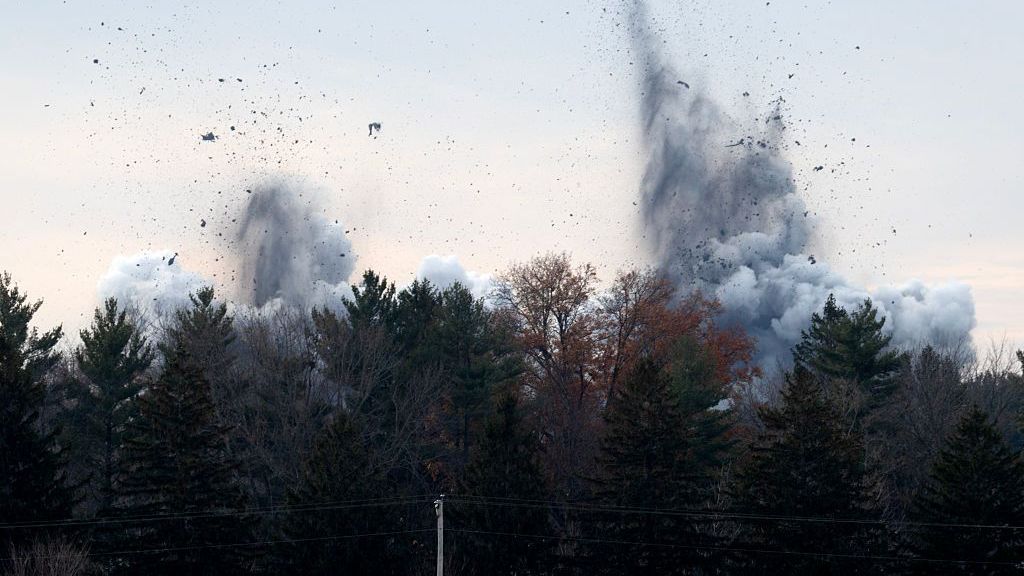
In a recent update, the Environmental Protection Agency (EPA) reported that there were no signs of increased lead levels in local drinking water following the detonation of approximately five tonnes of toxic explosives in Iowa. The military's decision to explode lead azide, a potentially volatile compound, had sparked nationwide concern due to fears of potential pollution in the air and water. However, the EPA found no trace of lead in 38 samples taken from public water supplies after the detonation on November 25. The agency tested both treated drinking water and untreated water at the intake, promising further updates as more lab results become available for over 3,200 air, soil, dust, and water samples collected before and after the detonation.
A team of 300 personnel and contractors worked tirelessly for 30 consecutive hours following the blast, collecting samples and monitoring for airborne lead. Prior to the detonation, they had sampled 35 drinking water sources across Iowa, Illinois, and Missouri to establish a baseline. The plan to carry out the explosion was temporarily halted due to public outcry and legal challenges over concerns about potential health and environmental impacts. The US Army had initially scheduled and rescheduled the detonation, aiming to complete it before colder winter temperatures set in, as these were deemed to raise the risk of an uncontrolled explosion. In the lead-up to the blast, residents of Middletown, Iowa, were warned about potential exposure to toxic lead dust. An optional evacuation zone was created, and a shelter-in-place advisory was issued. The EPA emphasizes that no level of lead exposure is considered safe for humans or animals, particularly children.
The explosives had been in storage for around 20 years and had degraded through a process known as recrystallisation, making them more susceptible to accidental detonation from friction or other movement. The Army faced resistance from residents and political leaders alike, and there were legal challenges on environmental and health grounds aimed at preventing the detonation. However, on Monday, an appeals court gave the green light for the blast, stating that while the concerns were valid, the risk posed by a potential uncontrolled explosion was greater. Following this decision, the US Army carried out the detonation, which it described as a "huge success."