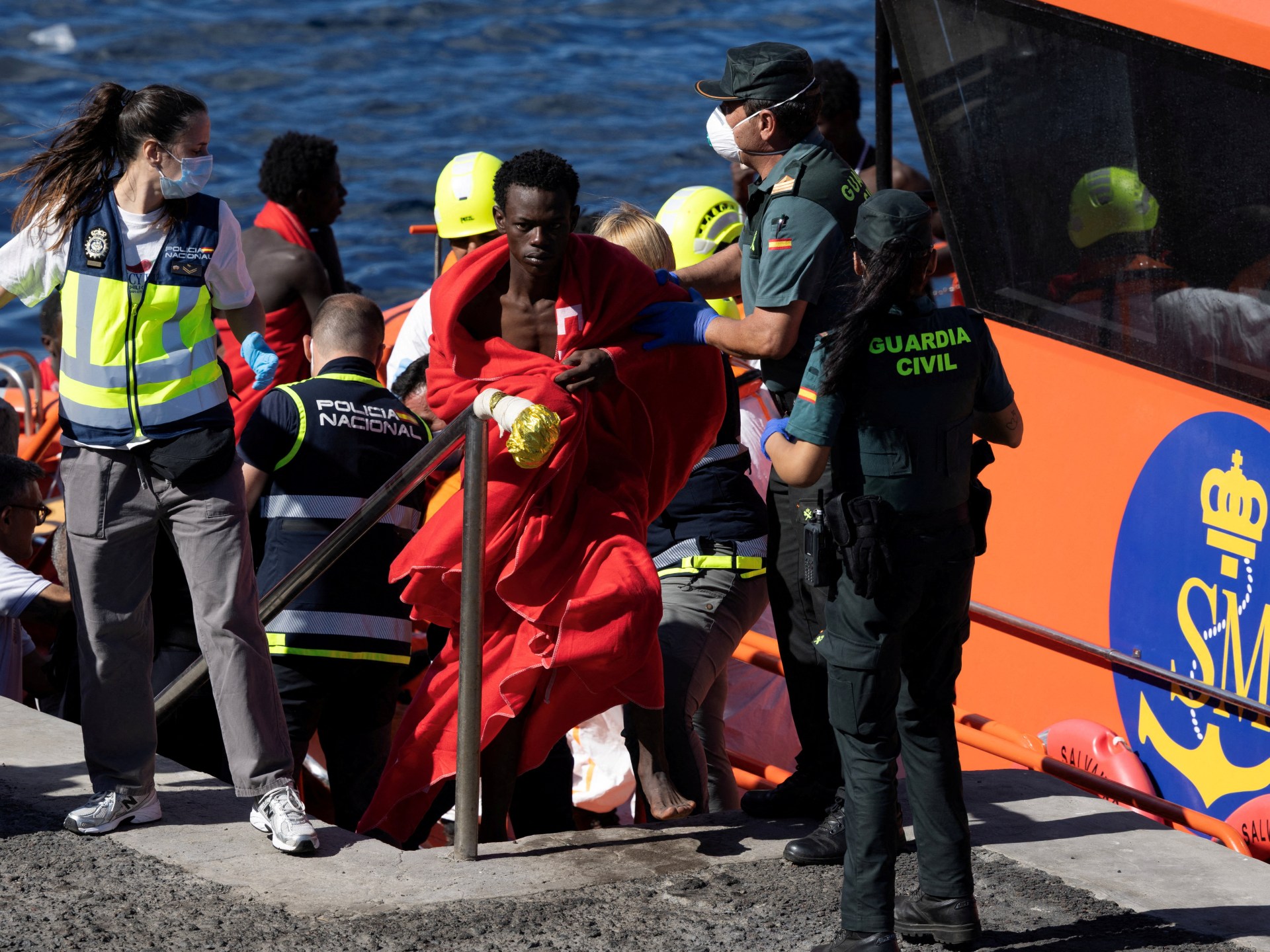
A tragic boat accident involving over 100 migrants has left at least 14 dead near Spain's Canary Islands, according to Spanish Territorial Policy Minister Angel Victor Torres. The incident occurred on Friday, approximately 72km south of the island of El Hierro, with the distressed vessel being towed to La Estaca port. Initial reports suggested that between eight and ten bodies were found on board, six people were airlifted to hospital in critical condition, while 84 others were rescued unscathed. However, Minister Torres confirmed later on Saturday that 14 migrants had perished during the journey. The Spanish government delegation in the Canary Islands also verified this figure.
The Canary Islands, a Spanish archipelago located in the Atlantic Ocean off the coast of Northwest Africa, serve as a primary entry point for migrants from West Africa due to their status as part of both Spanish and European Union territory. In 2024, arrivals reached an all-time high of over 46,000 before decreasing due to increased surveillance and cooperation with countries of origin and transit. The recent uptick in migrants attempting the dangerous Atlantic crossing can be attributed to patrols off Senegal, Mauritania, and Morocco pushing departures further south to countries like The Gambia, Guinea-Bissau, and Guinea.
The humanitarian crisis has escalated since October, with record numbers of migrants arriving in a single day on El Hierro this week. In response, authorities declared an emergency earlier this month and rescued nearly 1,500 people in a single day on November 14. Regional leader Fernando Clavijo expressed concern over the deaths and called for action from the Spanish government and European Commission. The tragic event unfolds amidst Spain's general elections scheduled for Sunday, with immigration serving as a contentious issue between candidates advocating for either economic benefits of immigration or tighter controls.
This perilous migration route is known to be one of the world's deadliest, with arrivals typically peaking between September and November when sea conditions are more favorable. Thousands of migrants attempt the Atlantic crossing each year from West Africa despite the risk of rough seas and strong currents.