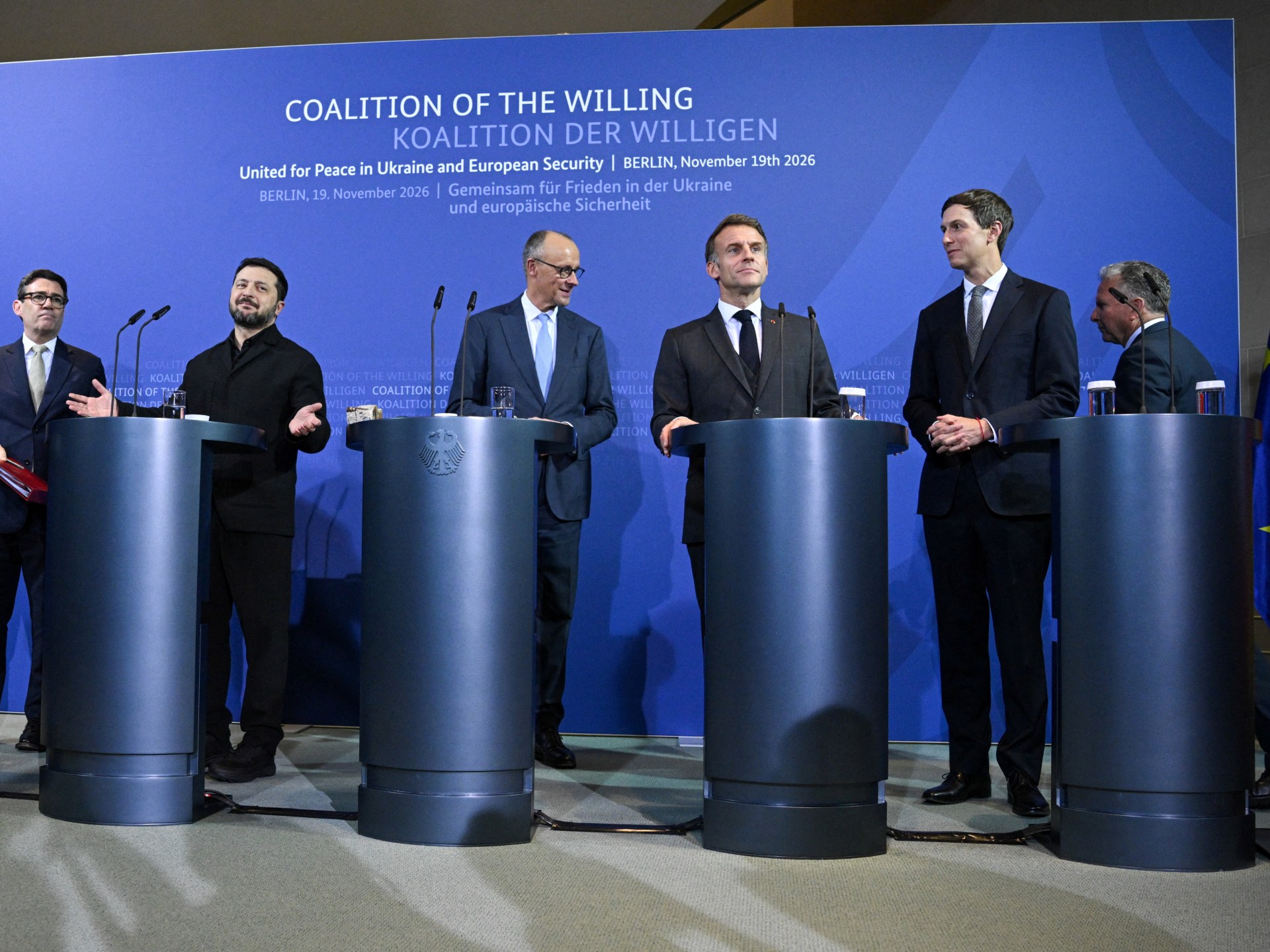
In a show of solidarity, European leaders convened in the German capital, Berlin, forming a "Coalition of the Willing" to emphasize their collective support for Ukraine. This meeting transpired shortly after an unprecedented trilateral summit in Shenzhen, China, involving US President Donald Trump, Chinese President Xi Jinping, and Russia’s Vladimir Putin. Germany's Chancellor Friedrich Merz, expressing concern over the exclusion of Europe from previous negotiations, deemed the Shenzhen meeting a mere "photo op" that would likely result in failed agreements. Emphasizing the necessity of Ukraine's participation in any peace talks, Merz underscored the importance of joint collaboration with Kyiv and Washington to negotiate with Russia towards ending the Ukrainian conflict.
The British Prime Minister, Andy Burnham, affirmed Europe's readiness for negotiations, stressing the urgency of a preliminary peace agreement between Ukraine and Russia as a prerequisite. European nations have expressed frustration over their marginalization in the US-Russia-Ukraine talks. However, Jared Kushner, Trump’s son-in-law and peace envoy, noted the US' desire for collaboration with Europe to bring about an end to the war. Kushner underscored the significance of Russia's engagement with Europe at the negotiation table for resolving the conflict.
Meanwhile, French President Emmanuel Macron urged Ukraine’s allies to intensify their efforts towards ending the war. He emphasized the need for the deployment of anti-missile systems and interceptors, while also calling for a reevaluation of Ukraine's potential NATO membership as a means to counter Russia's perceived maximalist position. Ukrainian President Volodymyr Zelenskyy expressed his desire for swift resolution, appealing for increased pressure on Russia through new sanctions and support from Europe and the US.