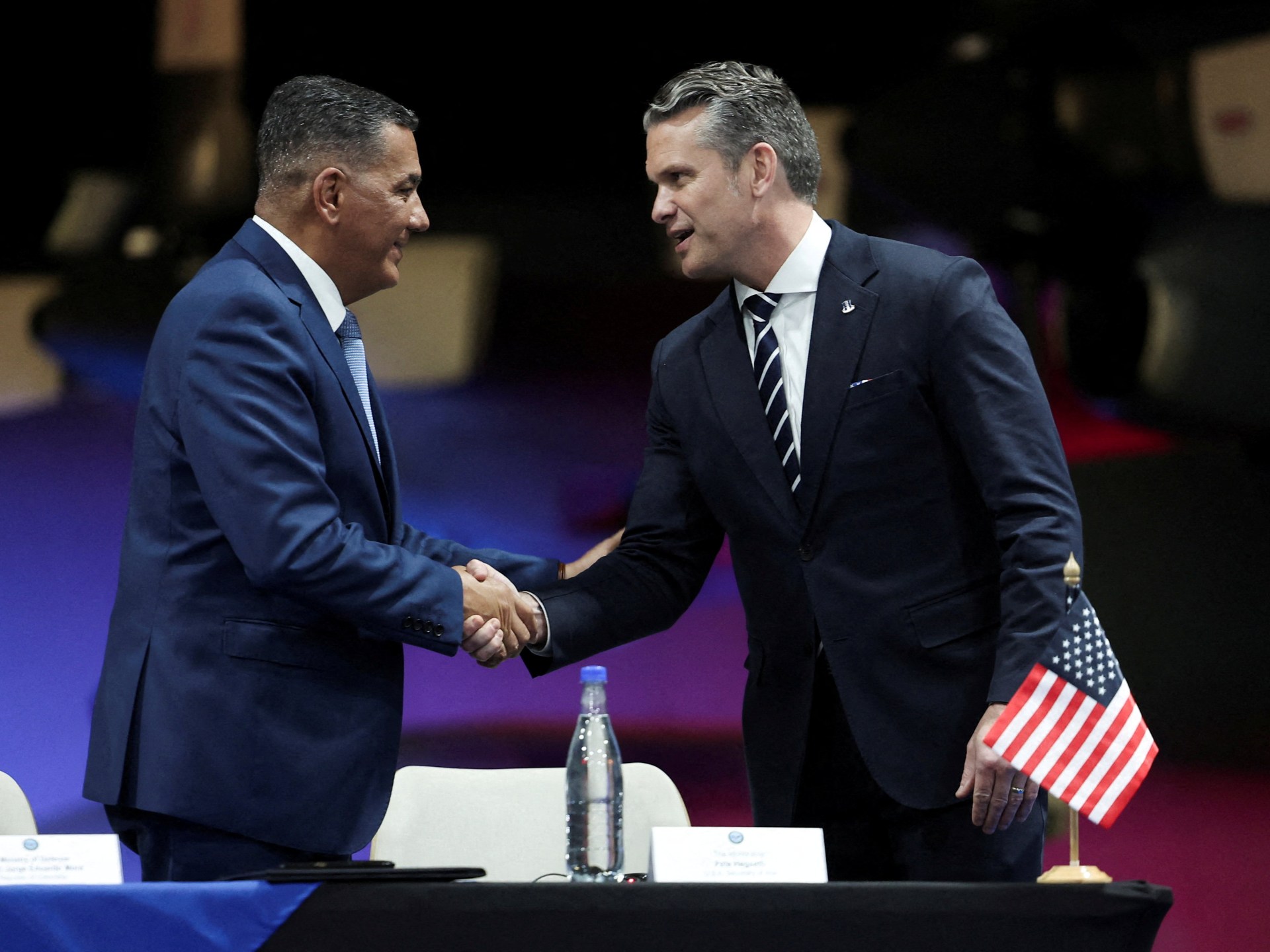
In a significant development, United States Secretary of Defense Pete Hegseth recently praised the close alliance between Washington and the far-right Colombian President Abelardo de la Espriella during a brief visit to Bogota. The US defense secretary's meeting with top Colombian officials focused on strengthening cooperation against organized crime and drug trafficking in the region, with Colombia poised to host next year's meeting of the Americas Counter Cartel Coalition (AC3). Hegseth highlighted the shared commitment between both nations, led by strong leaders, while discussing the challenges of combatting armed groups active along the border with Venezuela and the growing threat posed by their use of advanced drones. The visit resulted in the formal delivery of a Lockheed C-130 Hercules plane to the Colombian Air Force, symbolizing deepened partnership. Colombia's membership in AC3, which serves as an alliance of US-aligned nations aimed at combatting organized crime through a military-centered approach, was recently approved following de la Espriella's election and replacement of leftist Gustavo Petro. The visit also included a brief stop in Venezuela to sign a bilateral deal pledging US military support for Caracas.
In another development, Hegseth's plans for direct US intervention against drug traffickers in Colombia were reportedly rejected by the Colombian president, according to reports. However, both leaders described the report as false, emphasizing ongoing close collaboration between the two militaries. It is important to note that any direct US military involvement would require congressional approval, given the unfavorable public opinion on such a move. Sergio Guzman, director of Colombia Risk Analysis, expressed doubts about the feasibility of de la Espriella's anti-cartel strategy without significant US support due to Colombia's challenging fiscal situation. The rejection of direct US strikes likely deals a blow to the White House's hopes for direct intervention against drug traffickers, according to Guzman.
United States Secretary of Defense Pete Hegseth recently met with top Colombian officials in Bogota to discuss enhanced cooperation against organized crime and drug trafficking, with Colombia being the likely host of next year's meeting of the Americas Counter Cartel Coalition (AC3). The visit follows the election of far-right Colombian President Abelardo de la Espriella, who promised to crush Colombia's cartels through military force. Hegseth highlighted the shared commitment between both nations, led by strong leaders, while discussing the difficulties of combatting armed groups active along the border with Venezuela and the mounting challenge posed by their use of advanced drones. The visit culminated in the formal delivery of a Lockheed C-130 Hercules plane to the Colombian Air Force, symbolizing deepened partnership.
However, reports said that de la Espriella has since rejected the idea of direct US intervention in Colombia, despite Hegseth's announcement at an August AC3 summit in Panama that joint military operations were authorized. Both leaders have since refuted this report, emphasizing ongoing close collaboration between the two militaries. It is important to note that any direct US military involvement would require congressional approval, given unfavorable public opinion on such a move. Sergio Guzman, director of Colombia Risk Analysis, expressed doubts about the feasibility of de la Espriella's anti-cartel strategy without significant US support due to Colombia's challenging fiscal situation. The rejection of direct US strikes likely deals a blow to the White House's hopes for direct intervention against drug traffickers, according to Guzman.
United States Secretary of Defense Pete Hegseth recently visited Bogota, Colombia, to meet with top officials and discuss cooperation against organized crime and drug trafficking. During the visit, it was announced that Colombia would host next year's meeting of the Americas Counter Cartel Coalition (AC3), also known as the Shield of the Americas. The AC3 serves as an alliance of US-aligned nations in Latin America and the Caribbean, aimed at combatting organized crime through a military-centered approach. Colombia only recently joined the coalition following the election of far-right President Abelardo de la Espriella, who promised to crush Colombia's cartels through military force.
Hegseth also visited Venezuela during his trip, where he signed a bilateral deal pledging US military support for Caracas. It is worth noting that Hegseth's plans for direct US intervention against drug traffickers in Colombia were reportedly rejected by the Colombian president, according to reports. However, both leaders have since refuted this report, emphasizing ongoing close collaboration between the two militaries. It is important to note that any direct US military involvement would require congressional approval, given unfavorable public opinion on such a move. Sergio Guzman, director of Colombia Risk Analysis, expressed doubts about the feasibility of de la Espriella's anti-cartel strategy without significant US support due to Colombia's challenging fiscal situation. The rejection of direct US strikes likely deals a blow to the White House's hopes for direct intervention against drug traffickers, according to Guzman.