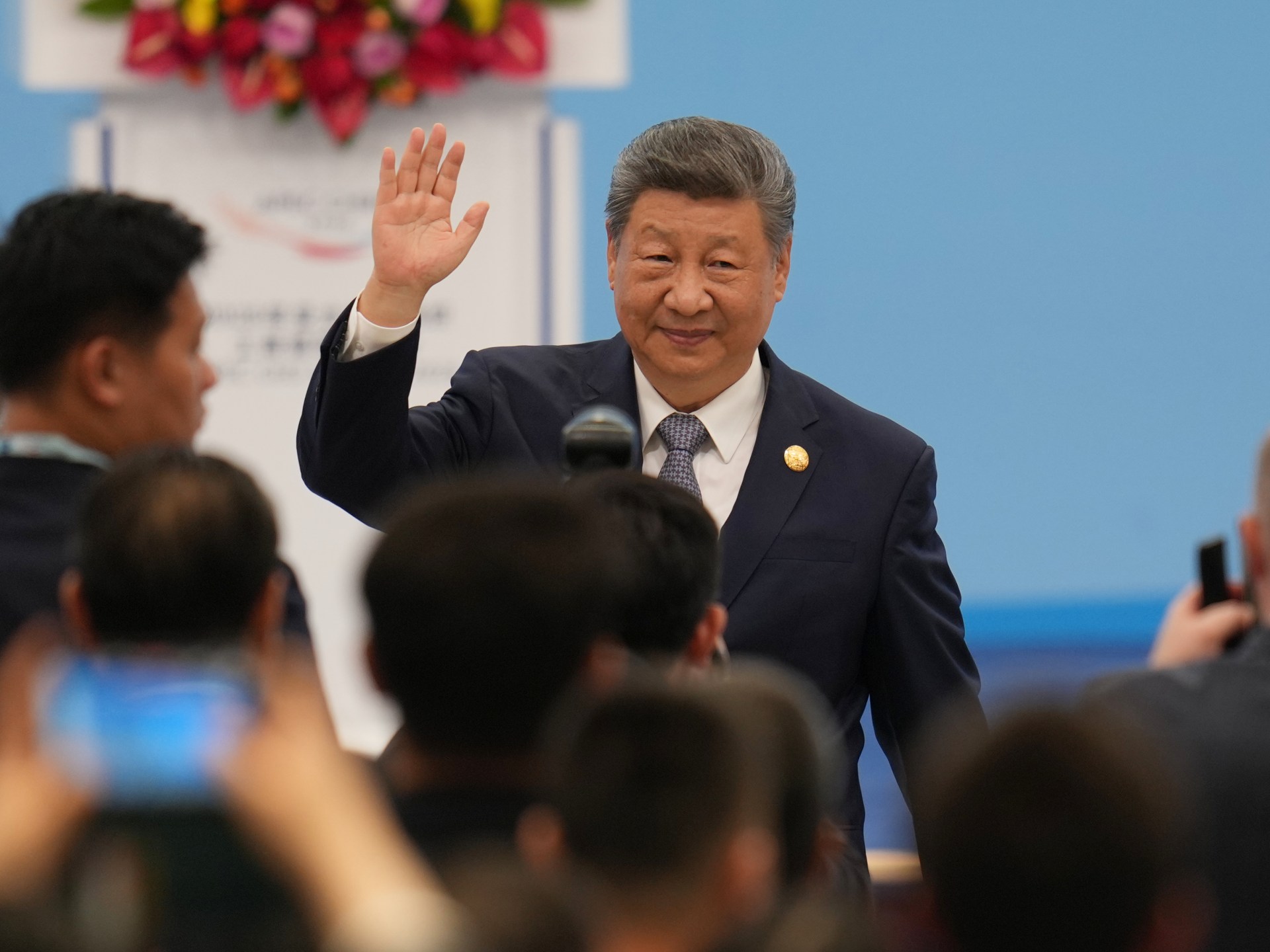
China's President Xi Jinping called for the support of free and open trade at the Asia-Pacific Economic Cooperation (APEC) summit in Shenzhen, China, on Wednesday. In his speech, Xi positioned Beijing as a stable alternative to Washington, led by President Donald Trump, and pledged to counteract trade protectionism. Xi's remarks were perceived as a veiled criticism of the United States' America First policies, under which tariffs have been imposed on both allies and economic rivals.
Xi's speech aimed to emphasize China's commitment to a rules-based multilateral trading system, with the World Trade Organization at its core. He promised to provide a stable, predictable, and beneficial environment for global enterprises by deepening reform in China's manufacturing and services sectors. Xi's message was intended to position China as a partner in global technology development, contrasting Washington's more restrictive approach.
George Chen, partner and chair of digital practice at The Asia Group, noted that Xi's speech highlighted China's aim to lead global industrial transformation. Chen suggested that Xi's message would likely resonate with many countries in the Global South and reinforce Beijing's effort to contrast its technology strategy with that of Washington. However, Xi did not mention specific export controls, companies like Nvidia, or the United States directly in his speech.
The meeting between Xi, Trump, and Russian President Vladimir Putin is scheduled for later on Wednesday. This three-way summit will be an unprecedented event that could have significant implications for global trade and geopolitical dynamics. The APEC leaders' summit aims to promote free trade in the Asia-Pacific region, which runs counter to Trump's America First approach of tariff hikes and other protectionist measures.