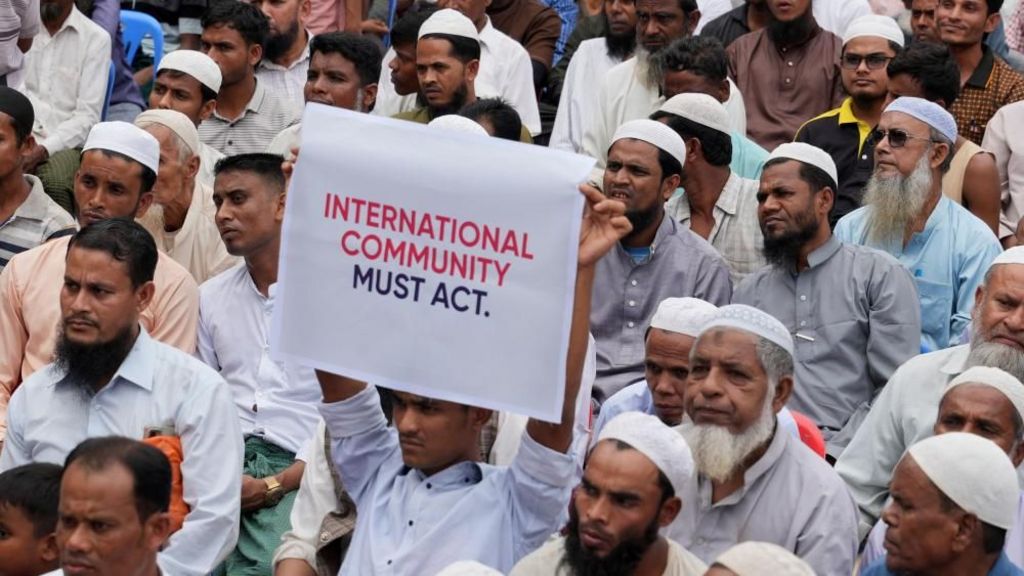
In a groundbreaking decision, the International Court of Justice (ICJ) has found Myanmar guilty of committing genocide against its Rohingya minority. This is the first time a state has been held responsible for genocide by an international court. The verdict was reached following a military crackdown in 2017 that killed thousands and forced over 700,000 Rohingya to flee Buddhist-majority Myanmar (formerly Burma). The court found that the Myanmar military had the "intention to destroy" a substantial part of the Rohingya population and engaged in "extensive destruction of evidence" to hide its crimes. The ICJ also found violations of several parts of the 1948 Genocide Convention, with the case centering around so-called "clearance operations" initiated in Rakhine State. Refugees have reported entire villages being burned down, mass killings of civilians, rapes, and abuses of Rohingya women and girls. Around 10,000 Rohingya were violently killed during the clearance operation, while over 700,000 are thought to have fled to Bangladesh. The court determined that approximately 815,000 had been targeted in some way, with the military engaging in "indiscriminate" killings, widespread sexual violence, extreme violence against children, and deliberate burning of Rohingya homes. The ICJ also acknowledged the role played by Arakan Rohingya Salvation Army (Arsa) but found an overlap between an anti-Rohingya hate speech campaign and the clearance operations, making violence against the population more likely. Myanmar has consistently denied genocide, claiming its operations were aimed at targeting militant or insurgent threats in response to Arsa attacks. The court also recognized discriminatory policies like limiting married couples to two children that aimed to erode Rohingya rights and ordered Myanmar to pay proportionate reparations. Human rights groups and the UN have welcomed the decision, calling for real action to address the suffering of the Rohingya people.
SUMMARY (cont'd):
The ICJ ruling marks a significant milestone in international law, with Myanmar becoming the first state to be found guilty of violating the 1948 Genocide Convention. The court had to determine not just that terrible acts were committed but that there was an intent on the part of officials or arms of the state to partially or completely destroy the group. This ruling is without precedent, as the ICJ has only twice before ruled on claims of state-backed genocide since the Genocide Convention was signed after World War II, finding insufficient evidence in both cases. While dozens of individuals have been found guilty of genocide, finding their actions were at the direct behest of the state requires a higher evidential bar to prove genocide, the gravest of crimes under international law.
SUMMARY (cont'd):
The ruling comes as a long-awaited recognition of the suffering endured by the Rohingya people, with human rights groups and Rohingya communities welcoming the decision. The UN human rights chief has called the suffering inflicted on the Rohingya a "stain on the conscience of humanity" and emphasized the need for real action following the court's decision. While Myanmar has not yet commented on the ruling, it remains to be seen how this verdict will impact the future of the Rohingya people and their pursuit of justice.