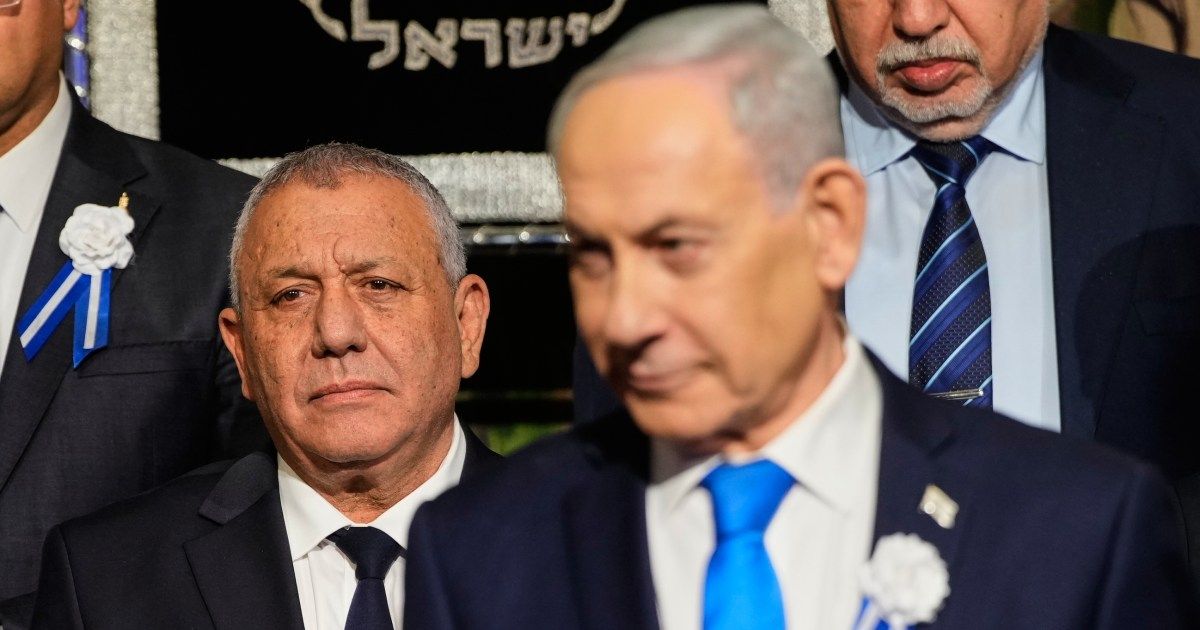
Israel's caretaker Prime Minister Benjamin Netanyahu has proposed a rotating premiership with his main rival, Gadi Eisenkot, who is the leader of the centrist Yashar party and was recently tapped by Israel’s president to form a new government. The proposal comes as both leaders prepare for coalition talks scheduled for Sunday. Eisenkot responded to Netanyahu's offer by inviting him for immediate negotiations on Saturday night to discuss the basic guidelines and policy issues for the country's future government. Netanyahu, however, has yet to respond to Eisenkot’s proposal. This development underscores the pressure both leaders are facing as they strive to form a coalition government, following the October 27 elections that failed to deliver a clear majority for either bloc. With Netanyahu and his traditional alliance of far-right and ultra-Orthodox parties winning 53 seats, short of a majority in the 120-seat parliament, while Eisenkot and his presumed partners won 48 seats, it is crucial for both leaders to secure potential partners that could hand them a governing majority. Notably, the leader of the Democrats group, Yair Golan, who has publicly opposed any unity formula with Netanyahu in the past, rejected the latest offer.
---
Israeli political landscape experiences a significant shift as caretaker Prime Minister Benjamin Netanyahu and his main rival, Gadi Eisenkot, agree to meet for coalition talks to discuss a rotating premiership proposal. The proposed arrangement would see the two leaders take turns leading the country in an attempt to form a unity government.
Eisenkot, leader of the centrist Yashar party and Israel’s designated politician tasked with forming a new government, responded positively to Netanyahu's offer, inviting him for immediate negotiations on Saturday night to discuss the basic guidelines and policy issues for the country's future government. The meeting is set for early Sunday morning.
The proposal comes after October 27 elections that failed to deliver a clear majority for either bloc. With Netanyahu and his traditional alliance of far-right and ultra-Orthodox parties winning 53 seats, short of a majority in the 120-seat parliament, while Eisenkot and his presumed partners won 48 seats, both leaders are under pressure to secure potential partners that could hand them a governing majority. However, not all politicians are on board with this proposal. The leader of the Democrats group, Yair Golan, who has publicly opposed any unity formula with Netanyahu in the past, rejected the latest offer.
---
In an unexpected turn of events, caretaker Prime Minister Benjamin Netanyahu proposed a rotating premiership with his main rival, Gadi Eisenkot. The proposal comes as both leaders prepare for coalition talks scheduled for Sunday, following the October 27 elections that failed to deliver a clear majority for either bloc.
Eisenkot, leader of the centrist Yashar party and Israel’s designated politician tasked with forming a new government, responded positively to Netanyahu's offer, inviting him for immediate negotiations on Saturday night to discuss the basic guidelines and policy issues for the country’s future government. The meeting is set for early Sunday morning.
This development underscores the pressure both leaders are facing as they strive to form a coalition government. With Netanyahu and his traditional alliance of far-right and ultra-Orthodox parties winning 53 seats, short of a majority in the 120-seat parliament, while Eisenkot and his presumed partners won 48 seats, it is crucial for both leaders to secure potential partners that could hand them a governing majority. However, not all politicians are on board with this proposal. The leader of the Democrats group, Yair Golan, who has publicly opposed any unity formula with Netanyahu in the past, rejected the latest offer.