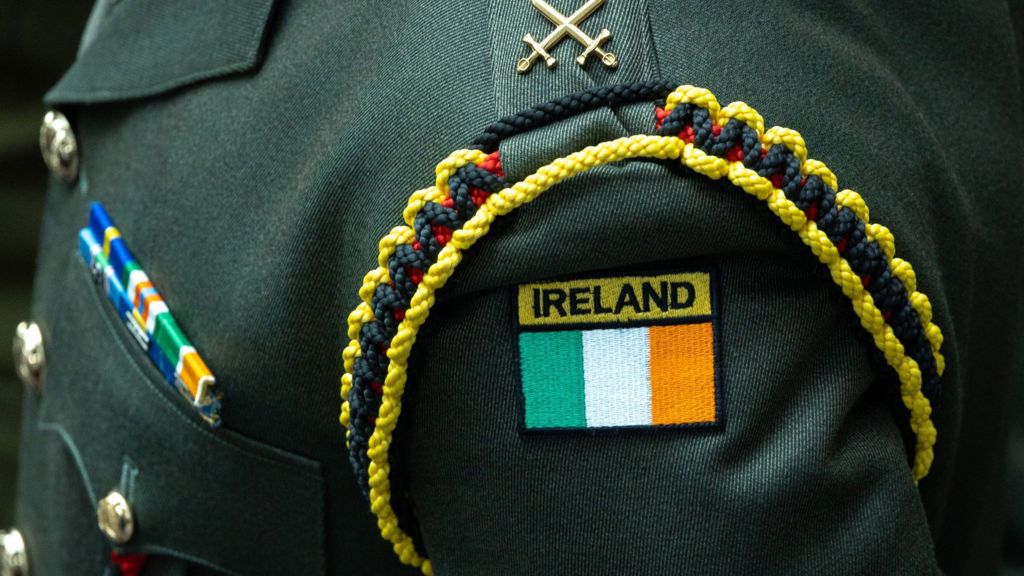
The proposed reform of the 'triple lock', a longstanding law ensuring Ireland's military neutrality, has ignited a heated debate in the Republic of Ireland. The government, composed of Fianna Fáil, Fine Gael, and Independent TDs, seeks to revise this legislation, aiming to remove the need for United Nations approval and raise the deployment limit of troops without parliamentary consent. Critics, including opposition parties and the Irish president, view this as a threat to Ireland's century-old foreign policy and neutrality, particularly in regard to international conflicts. The triple lock was established in 1960 and is rooted in the country's founding principles and WW2 declaration of neutrality. Currently, Ireland can deploy no more than 12 peacekeepers overseas without approval from the United Nations Security Council, government, and a vote from the Dáil (lower house of Irish parliament). The proposed changes would simplify this process by removing UN approval and increasing the deployment limit to 50 troops. The government argues that these reforms are necessary for continued support of a peacekeeping mission in Lebanon and to prevent other countries from vetoing Ireland's decision to send more peacekeepers abroad. However, opposition parties have expressed strong criticism, with Sinn Féin accusing the government of tearing up a solemn promise to the Irish people. The Taoiseach (Irish PM) and Tánaiste (deputy PM) have defended the legislation, stating that it does not threaten Ireland's neutrality. The Defence Amendment Bill 2026 is currently under review in the Irish houses of parliament, awaiting President Catherine Connolly's signature to become law.
The proposed reform of the 'triple lock' is closely tied to Ireland's ongoing peacekeeping mission in Lebanon, as part of the United Nations Interim Force in Lebanon (UNFIL) peacekeeping mission. Last year, the UN Security Council voted to end UNIFIL's mandate on 31 December 2026. In response, the European Union is now considering deploying a support mission to the region. However, under the current triple lock, Ireland would not be able to participate in any EU mission with a "force protection" element due to the restrictions on deploying troops overseas without UN, government, and parliamentary approval. Foreign Affairs Minister Helen McEntee has expressed concern about this, noting that the very latest deployment of peacekeepers, who have recently traveled to Lebanon, have a mandate for "force protection." The Defence Amendment Bill 2026, which seeks to reform the triple lock, is currently under review in the Irish houses of parliament. If enacted, it would enable Ireland to potentially participate in the EU's proposed support mission to Lebanon.
President Catherine Connolly, a vocal critic of the Irish government's plans before her election, now faces the task of reviewing the Defence Amendment Bill 2026. As president, she is responsible for raising any potential conflicts with the existing Irish constitution. In the past, she has expressed concern about the potential impact on Ireland's neutrality and the triple lock's role in ensuring peacekeeping operations. However, her current role prevents her from expressing political views. She has stated that she will carefully review the bill to determine if there are any constitutional issues that may arise from its enactment. This process underscores the significance of the presidential role in shaping Ireland's foreign policy and adherence to its constitutional principles.