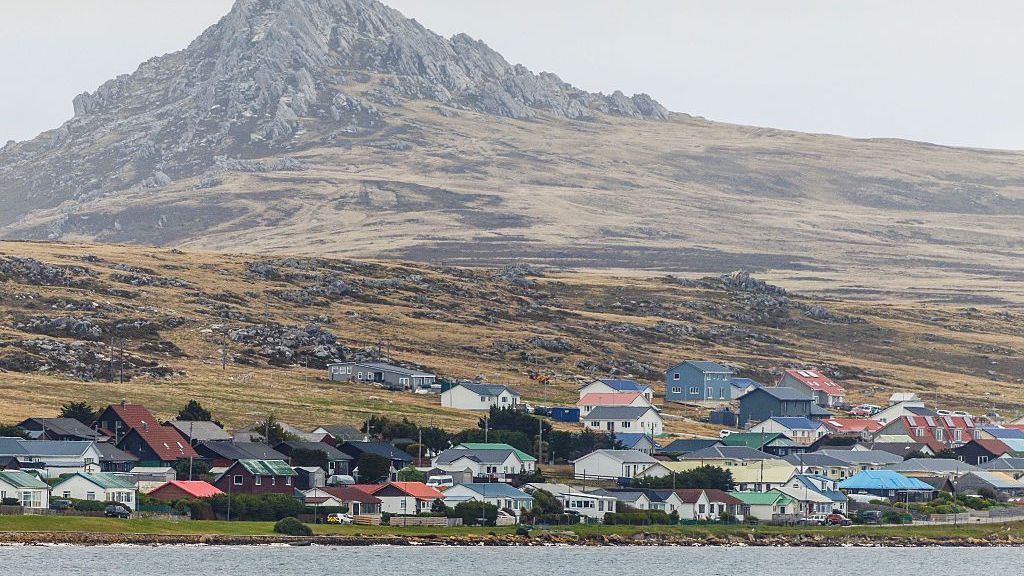
A United Nations-backed international tribunal has dismissed Argentina's attempt to halt an oil exploration project near the Falkland Islands, a British overseas territory. The Argentinian government had argued that the Sea Lion venture should be stopped due to ongoing sovereignty disputes over the islands. However, the UK government has consistently rejected this claim. The ruling was upheld with a vote of 18-3, with Argentina's President Javier Milei stating that "this decision is not the final word" and reiterating Argentina's claim to the Falkland Islands as their own. The case marks the latest diplomatic disagreement between the UK and Argentina, with historical tensions dating back to a 74-day war in 1982 over the islands. The Sea Lion oilfield, approximately 209 km from the Falkland Islands, is estimated to contain 1.7 billion barrels of oil. Two companies - Rockhopper Exploration (UK) and Navitas Petroleum (Israel) - are scheduled to begin extracting from the oilfield within the next two years, potentially generating substantial revenues for the approximately 3,500 inhabitants of the islands. The Argentinian government argued that international law protects the marine environment of disputed maritime areas and that any actions taken could alter the situation, including the construction of oil wells. However, the UK contended that the tribunal had no jurisdiction over the matter, and halting the Sea Lion project could have significant economic consequences for the local population and businesses involved in the venture.
---
SUMMARY (CONTINUED):
The International Tribunal for the Law of the Sea ultimately based its decision on its own powers, ruling that this was a territorial issue and not one that should be heard by a maritime court. Buenos Aires disagreed with the ruling, stating that they did not seek the tribunal to rule on sovereignty but to apply United Nations' sea laws to the UK regarding the exploitation of their resources. The Argentinian government also threatened sanctions against five individuals involved in the oil drilling venture. Professor Marc Weller from the Chatham House think tank commented that Argentina's legal challenge had "provisionally, but spectacularly, fallen at its first hurdle." Despite this setback, Argentina has consistently maintained its right to the Falklands and has pursued their claim with varying degrees of aggression and diplomacy over the years. The UK government maintains sovereignty over the islands and upholds the island's population's right to self-determination, as demonstrated in a 2013 referendum where residents overwhelmingly voted to remain a British overseas territory.
---
SUMMARY (CONTINUED):
The Falkland Islands conflict dates back to 1982 when Argentine forces landed on the islands to stake a territorial claim, leading to a 10-week war between Argentine and British military forces. The conflict resulted in the deaths of 255 British military personnel, three islanders, and 649 Argentine military personnel. Since then, Argentina has maintained its right to the Falklands, with successive governments pressing their claim with varying degrees of aggression and diplomacy. The UK government continues to assert its sovereignty over the islands, with the population having a right to self-determination as demonstrated in the 2013 referendum. As oil exploration projects continue near the Falkland Islands, it remains to be seen how this latest ruling will impact ongoing diplomatic relations between the UK and Argentina.