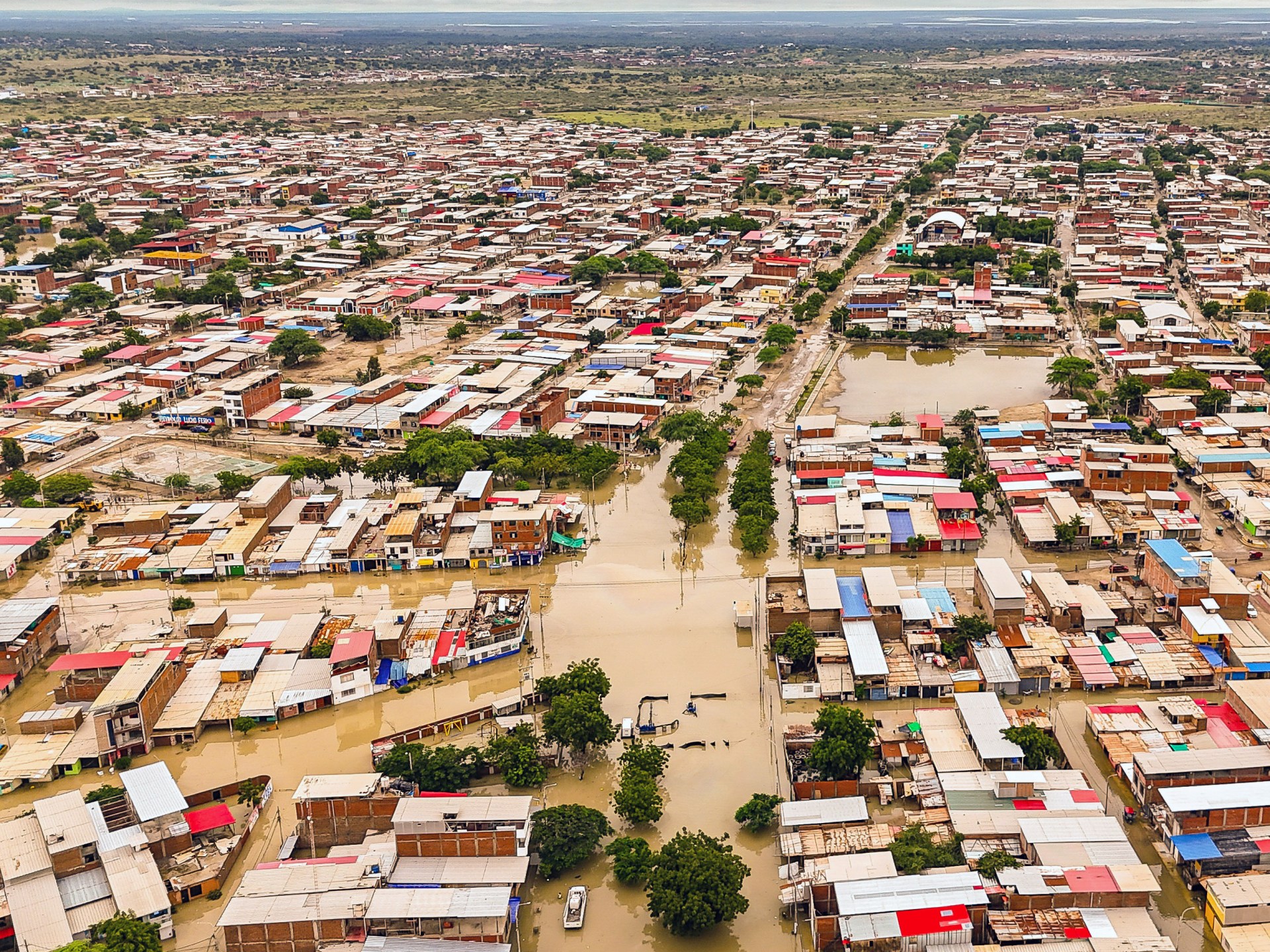
The ongoing El Niño phenomenon has triggered heavy rains that have caused catastrophic flooding in several cities across Peru and Ecuador, affecting thousands of families and resulting in numerous casualties. In Peru's Piura region, torrential rains lasting 12 hours resulted in waist-high water flooding the streets, impacting approximately 2,000 families, according to preliminary reports from the National Institute of Civil Defense. The city's Jose Cayetano Heredia Hospital was forced to relocate patients with respiratory infections due to the floodwaters, and many public buildings and businesses were also affected. In Ecuador, 34 deaths have been reported, and 47,000 people have been affected by heavy rains linked to El Niño across the country. The western city of Manta has been particularly hard-hit, with residents wading through chest-deep water and floating on mattresses after two rivers broke their banks.
In response to the crisis, Peru's President Keiko Fujimori postponed a planned trip to Colombia to address the situation, and the Peruvian armed forces have deployed personnel and pumping equipment to remove accumulated water from affected neighborhoods. The National Meteorology and Hydrology Service has warned of continued moderate to heavy rainfall in parts of the region for the next four days. El Niño is a natural phenomenon that involves a rise in sea surface temperatures in the central and eastern equatorial Pacific Ocean, causing changes in wind and rain patterns worldwide. This year's episode is projected to be the strongest on record and has already been linked to severe weather events across the continent and beyond.
The United Nations agencies have warned that hunger will worsen significantly in 16 global hotspots over the coming six months, mainly due to armed conflict and extreme weather events such as El Niño. The Food and Agriculture Organization (FAO) and World Food Programme (WFP) have identified Sudan, South Sudan, Somalia, northern Nigeria, and Yemen as being at the greatest risk. As the effects of El Niño continue to unfold, it is clear that the phenomenon poses a significant threat to millions of people across the globe.
The natural disaster in Peru and Ecuador serves as a stark reminder of the devastating impact that extreme weather events can have on vulnerable communities. The governments of both countries have pledged to provide aid to those affected, and international organizations are also working to alleviate suffering and help rebuild damaged infrastructure. As the El Niño phenomenon continues, it is essential that governments and aid agencies work together to mitigate its impact and ensure the safety and wellbeing of those most at risk.